By Laura Weingartner
Waking up to snow blowing sideways each morning and feeling the afternoon sun warming the air was the kind of volatile weather that defined Kodiak, Alaska, during the weekend of March 28–30, 2025.
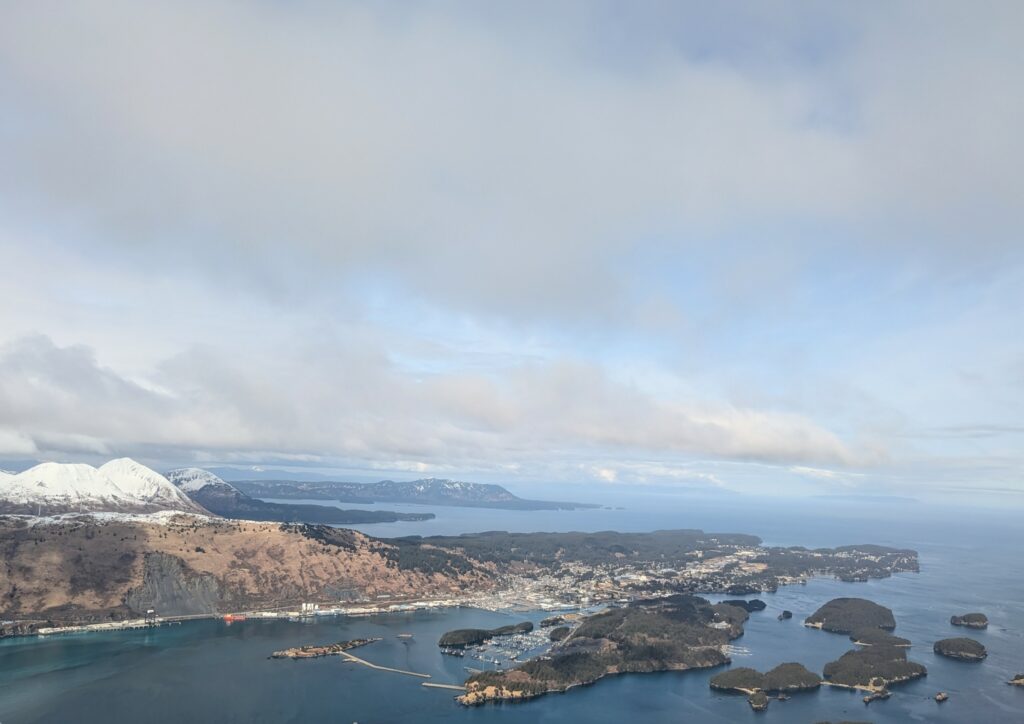
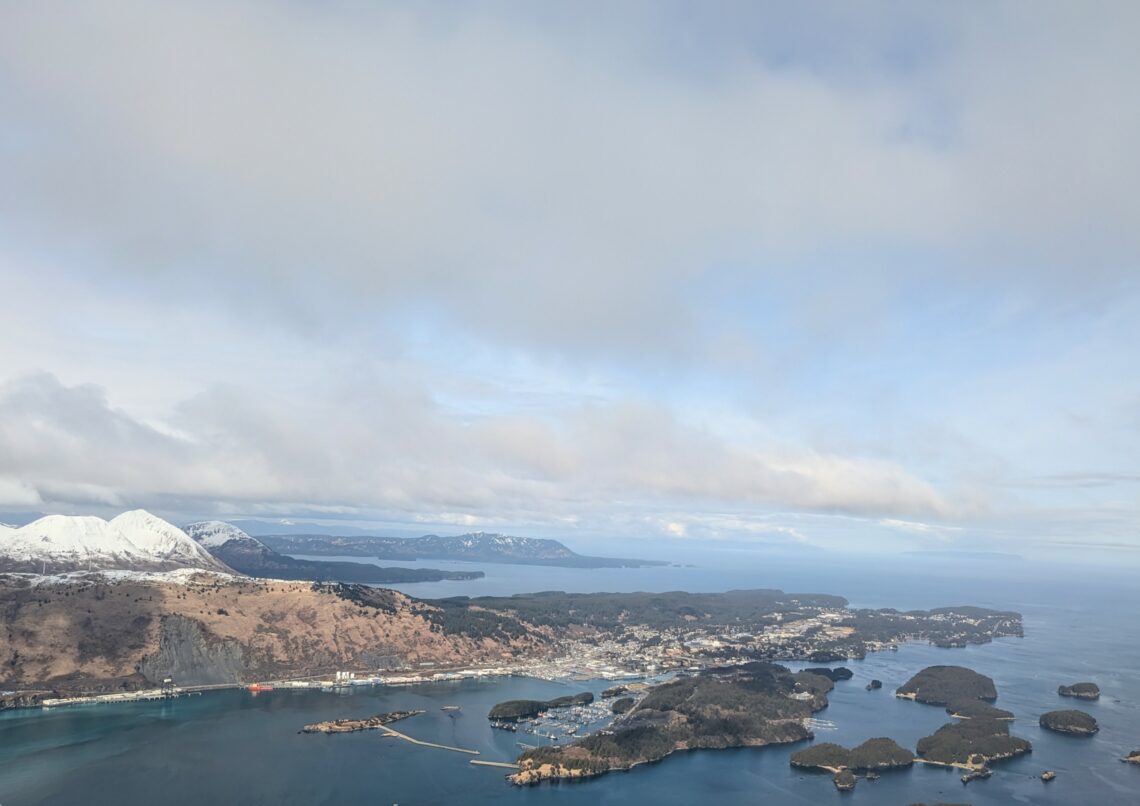
View of Kodiak from the plane
While the weather was dramatic, the atmosphere at the 2025 Alaska Food Festival and Conference was warm and inviting. People from various backgrounds — farmers, fishermen, business owners, educators and students — came together to discuss the state’s unique food system challenges and solutions.
Alaska’s food system includes growing, harvesting and raising cows, kelp, fish, subsistence hunting, vegetables, grains, berries and more. Then there’s the complicated logistics of getting the food to the people: transporting farmed goods to villages, finding markets for kelp, bringing traditional foods to patients in hospitals, increasing local foods in schools, and processing livestock in USDA-certified facilities, to name a few. There’s also a public health aspect, which includes preserving food safely, monitoring livestock diseases and providing healthy options to Alaskans statewide.
Two days of presentations covered many aspects of Alaska’s food system, bringing together individuals passionate about Alaska’s food systems, many of whom already knew each other. The weekend felt like a reunion, and students learning about the industry and attending the conference for the first time were also welcomed.
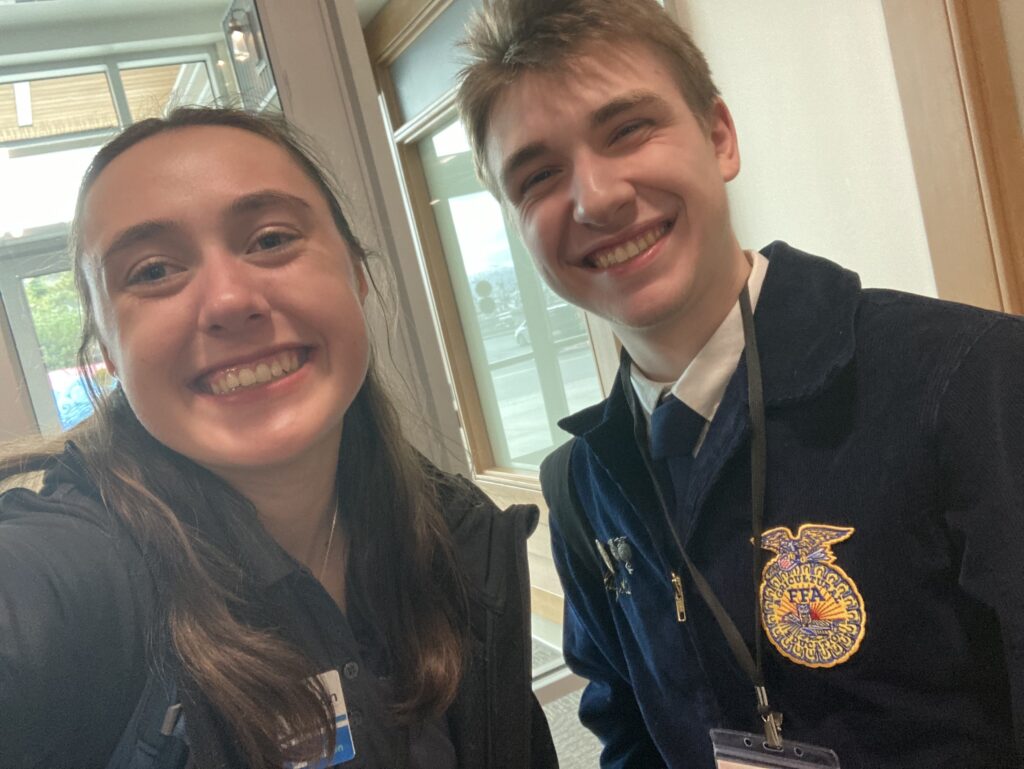
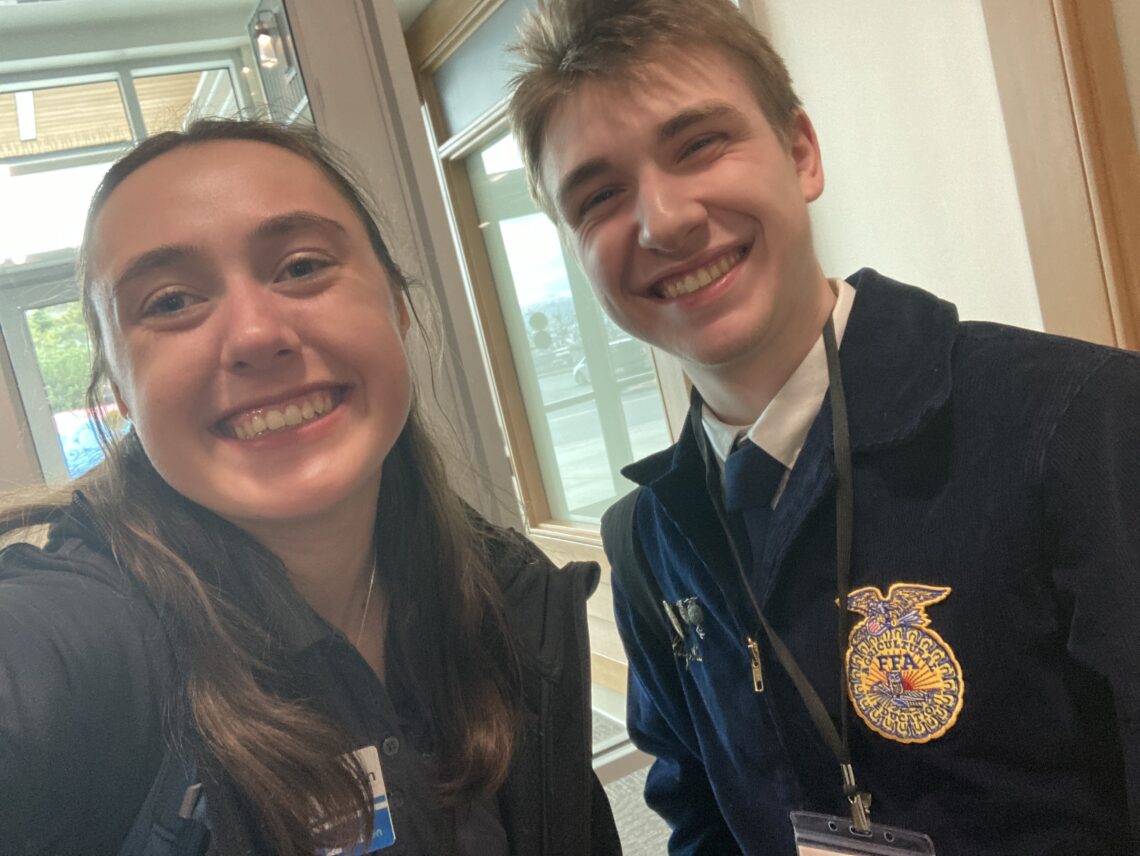
NextGen scholar Inga Peterson and Future Farmer of America and high school student Liam Wade both attended the Alaska Food Festival and Conference.
The conference was an opportunity for Inga Peterson, a freshman at the University of Alaska Fairbanks studying natural resources and environment, to learn how to contribute to Alaska’s food system and “meet the people I’ll work with forever,” she said. She plans to have a career in agriculture in Alaska, working on the educational side and eventually having her own farm.
Peterson is one of the nine United States Department of Agriculture NextGen scholars who attended the conference in Kodiak. The NextGen program provides opportunities for students to gain hands-on experience in food systems, agriculture, and related fields through internships, scholarships and career development programs. The program funded seven in-person attendees.
“The primary goal (of students attending the conference) was to expand the awareness for students of the career opportunities that exist with regard to workforce needs in and around the agricultural industry in Alaska and beyond the state,” said DeShana York, NextGen project director.
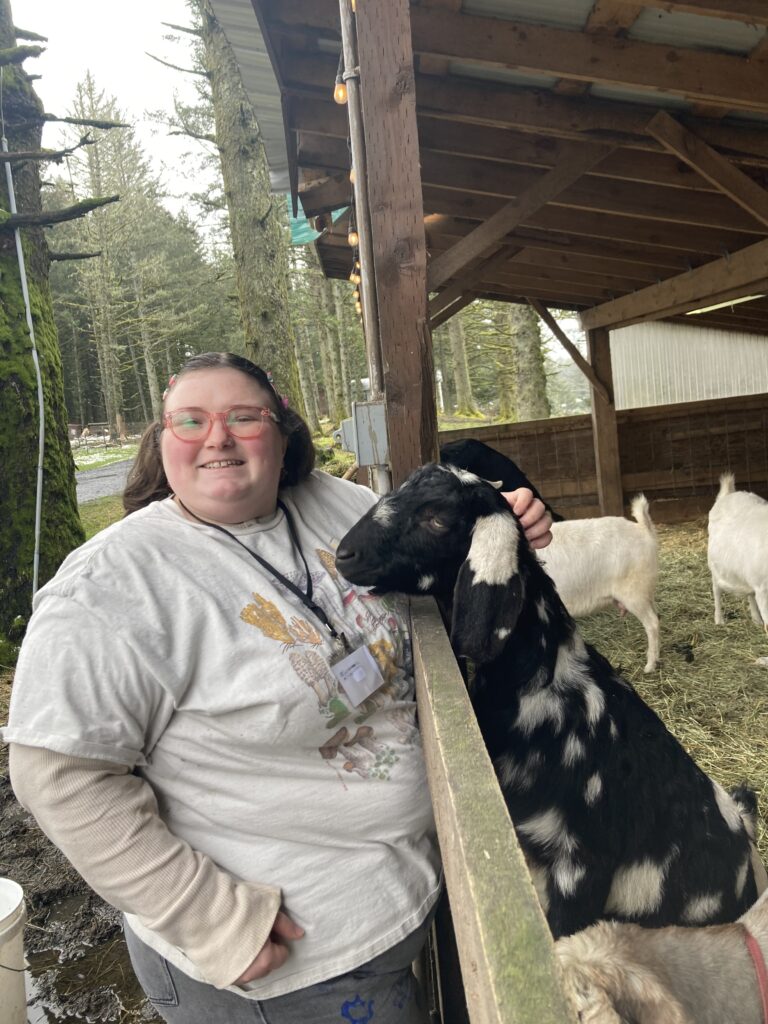
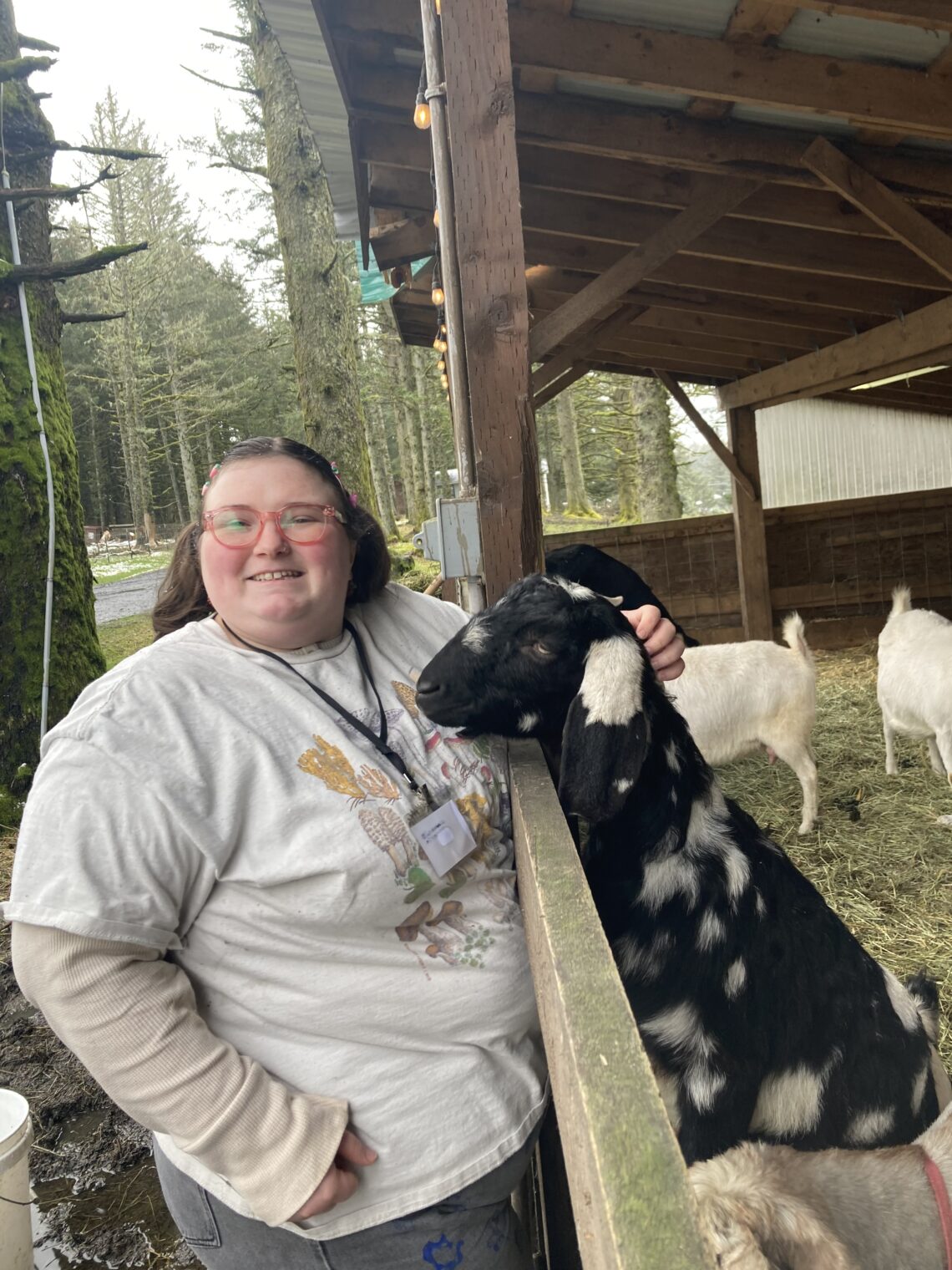
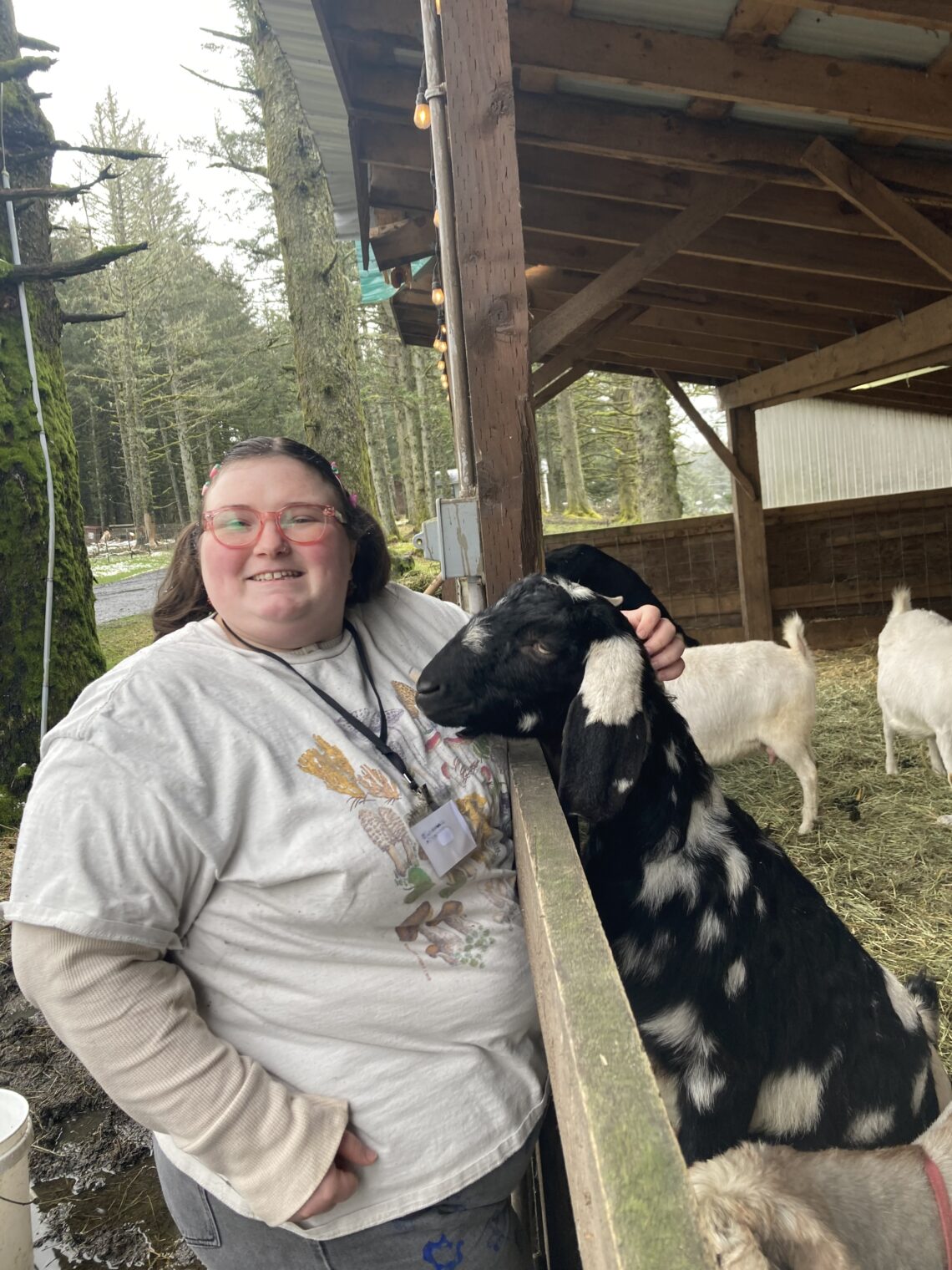
NextGen scholar Cam Piciaccia visits with the goats during a tour of Kelli Forman’s farm, The Last Small Farm, in Kodiak, Alaska.
They also had the opportunity to meet many of the people doing the work necessary to uplift and maintain a thriving industry in such a large and widespread state.
Cam Piciaccia, a NextGen scholar and UAF junior, said their conference highlight was meeting Dune Lankard, the founder of Native Conservancy, a nonprofit organization that empowers Alaska Native communities to protect and preserve their ancestral lands. Lankard and Piciaccia discussed a summer internship focused on food sovereignty from an Indigenous perspective.
“There’s so much I can learn from the experience,” said Piciaccia, who is working on multiple degrees, including a bachelor of arts in climate and arctic sustainability with a concentration in Indigenous studies and a minor in sustainable agriculture.
The NextGen Internship Program provides paid summer internships so students can gain hands-on experience in food, agriculture, natural resources and related work. This program can fund opportunities like the one Piciaccia hopes to get with the Native Conservancy and is currently open to all UAF students. Visit the USDA NextGen page for more information.
The NextGen program supports students from various backgrounds who are interested in careers related to agriculture and natural resources. Irina Koval, a junior studying business at UAF, comes from generations of growing food but never thought she could apply business to agriculture. NextGen helps her and other students connect their myriad interests.
Charles Flint is also studying business at UAF and is getting ready to graduate at the end of the summer. “Combining my business background with my love for agriculture will allow me to make a meaningful impact in my community,” Flint said.
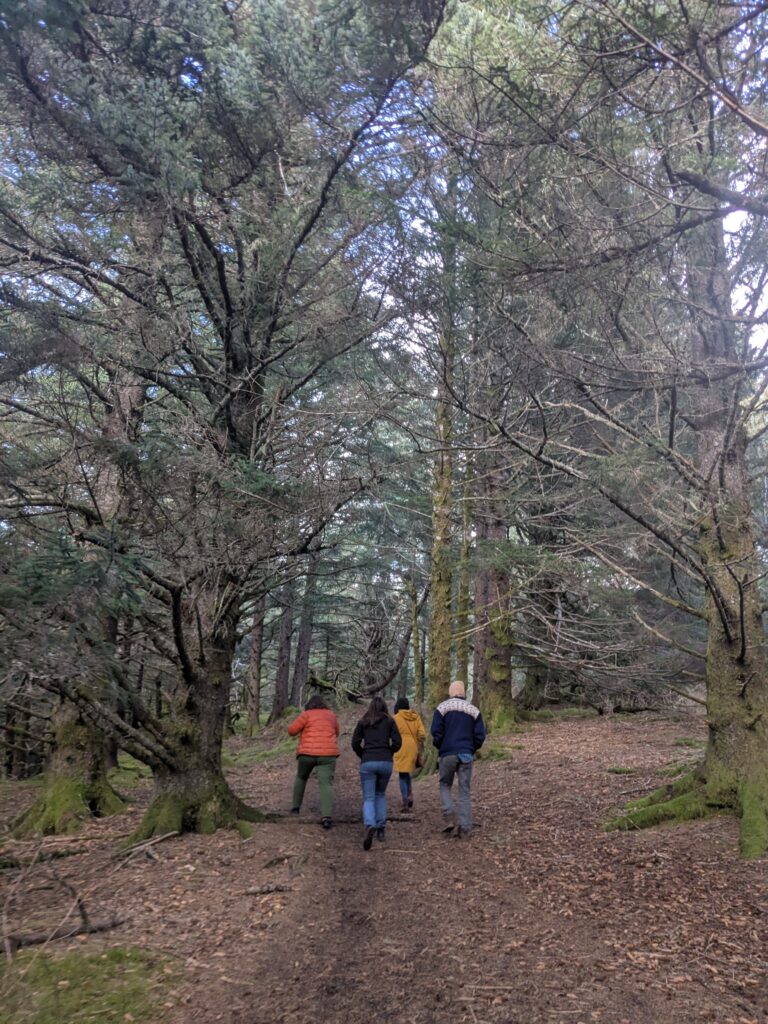
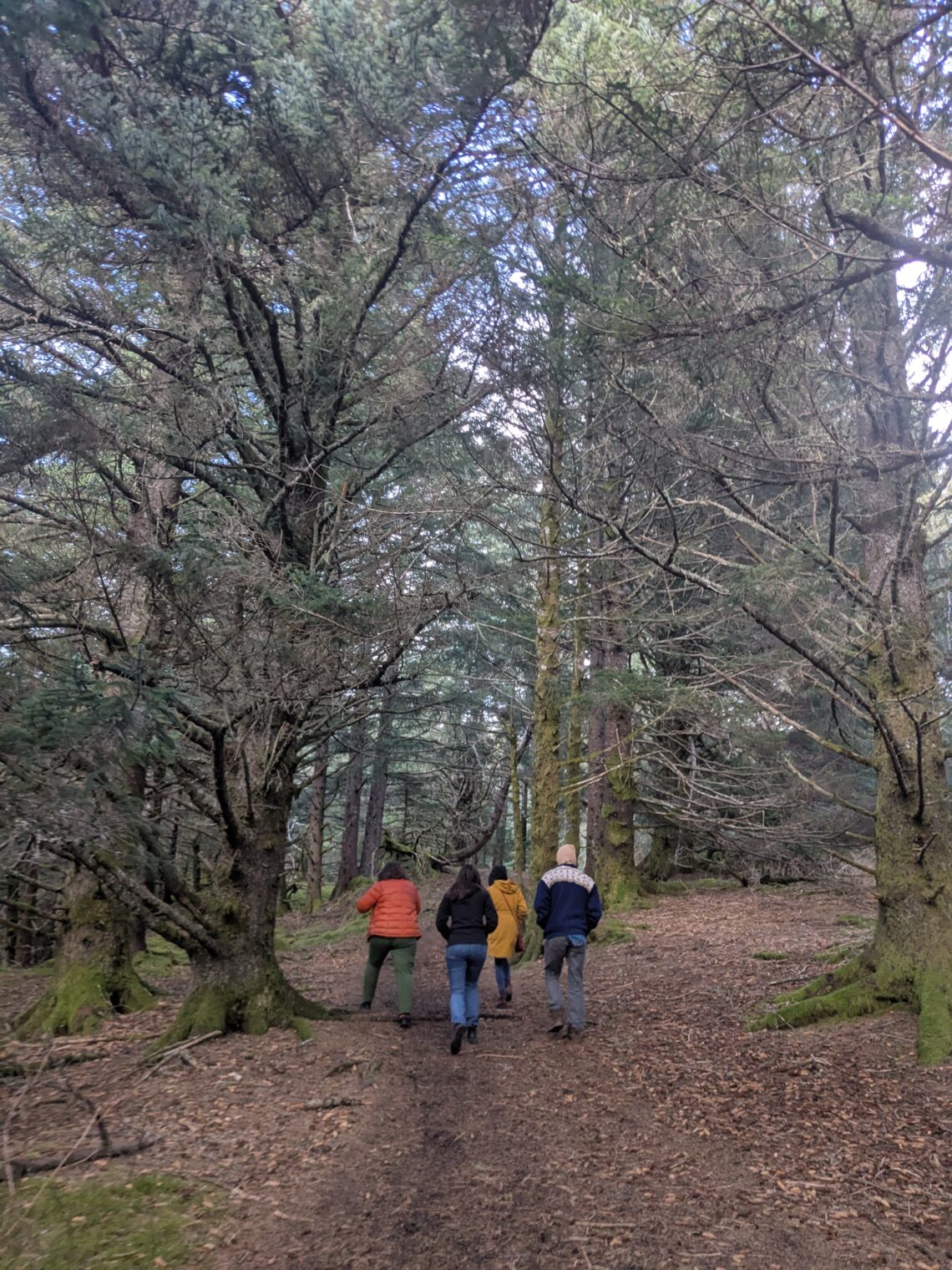
NextGen scholars Inga Peterson and Callen Christiansen explore some of Kodiak’s trails with other conference attendees.
His experience at the conference listening to farmers talk about their experiences of starting and operating their farms and the challenges they face gave him a deeper appreciation for the resilience and dedication required in the industry.
The Alaska Food Festival and Conference brings people together to deepen knowledge, make connections and provide opportunities to expand, support and maintain local food production.
To continue to build Alaska’s food systems, Koval said, “It’s going to take us, the youth, to do more.” The NextGen program prepares students like Koval to do just that.
NextGen scholarship applications are open for the fall semester for all UAF students. The deadline to apply is May 1. Learn more and apply here.
