By Alexandria Wenninger
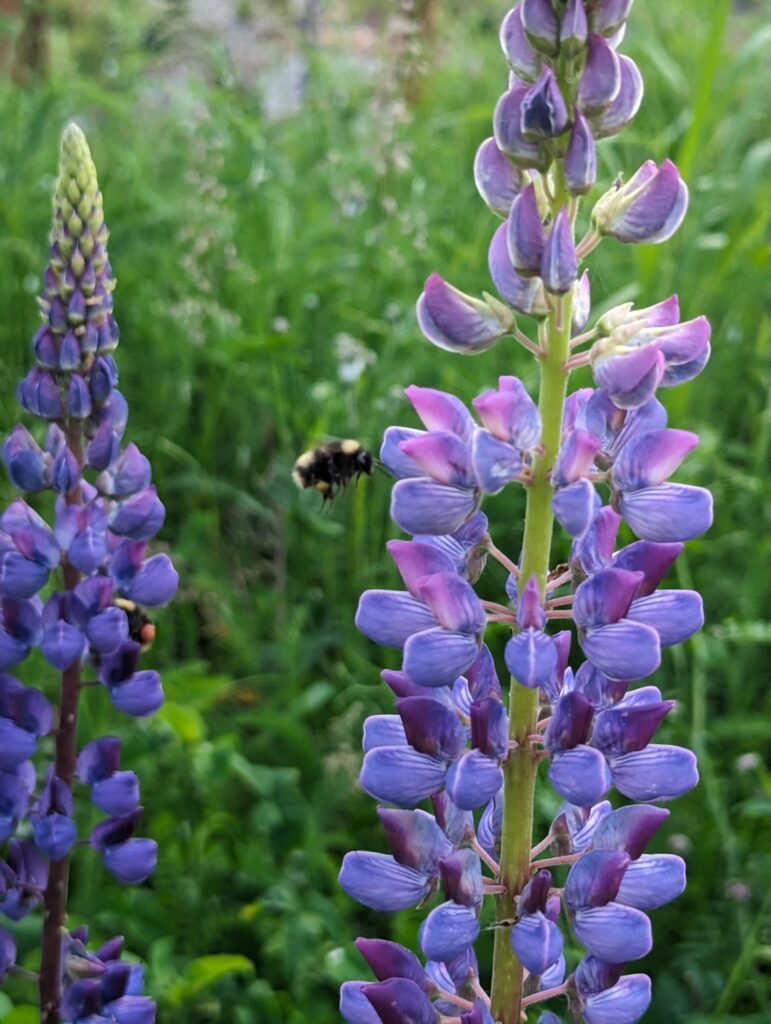
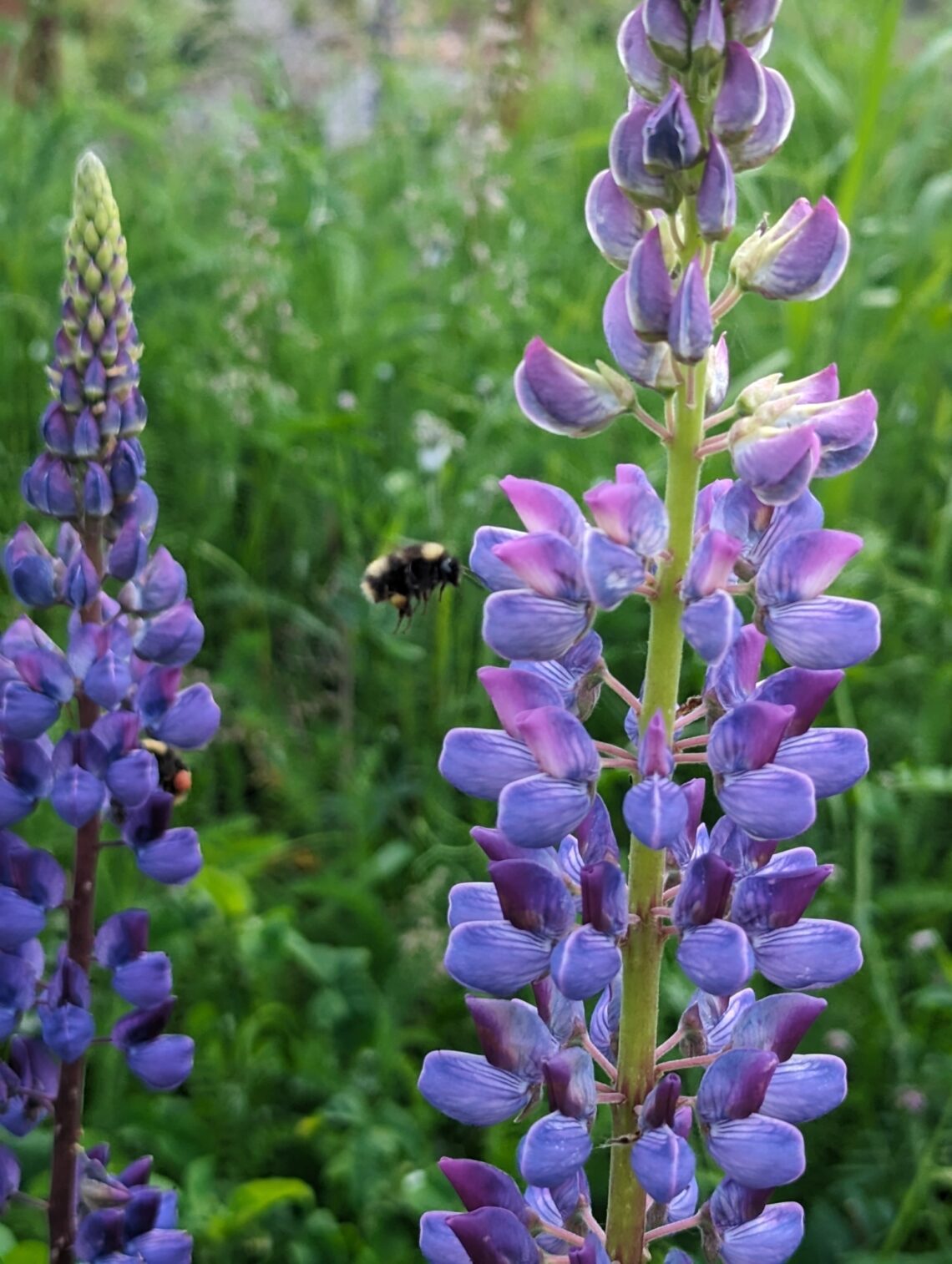
A bumblebee buzzing around lupine in Anchorage.
No celebration of Native Plant Month could be complete without honoring the stewards of our native plant diversity, the pollinators. Bees and other insects contribute substantially to the maintenance of flowering plant diversity through their role in pollination. Not only do pollinators facilitate the reproduction of many of our native plants, but they also help maintain plant genetic diversity, a cornerstone of resilience for our native plant communities. In exchange, native plants provide nourishment for pollinators, in the form of pollen and nectar, as well as shelter for stem-nesting species.
Many are surprised to learn that Alaska is home to at least 130 species of bees. Our bees species outnumber our mammal species, even including the marine mammals! Bumble bees alone account for over twenty species of Alaska’s bees. Bumble bees are a garden delight; I look forward to spending sunny mornings in my garden, sipping a cup of tea while watching them move their fuzzy bodies from one flower to the next, humming their little tune. That characteristic buzz is not just for aesthetic appeal, though. Bumble bees are capable of a type of pollination aptly named “buzz pollination”, which is critical for efficient pollination of some of our beloved berry species, such as blueberries and lingonberries, as well as some of our wildflowers, such as shooting stars. While honey bees (a non-native species) get most of the media attention for their role in pollination, honey bees are not capable of buzz pollination. Our native bees are uniquely suited to pollination of many of our wild foods we rely on for sustenance and hold so fondly. Supporting our local pollinators is critical to the health of our wild plants.
Supporting our local pollinators starts right in our backyards. Below are five tips for building pollinator habitat into your own garden.
- Plant flowers that bloom at different times of the season. Different pollinators emerge at different times during the summer. By staggering bloom timing, you can help provide a more continuous supply of food for pollinators. Early-bloomers in Alaska include plants like willow, northern red currant, and Jacob’s ladder. Intermix these with mid-summer bloomers, such as prickly wild rose, western columbine, and wild potato, as well as late-season bloomers, such as fireweed, yarrow, and goldenrod, for broad coverage of bloom timing. The Alaska “Planting guide for your native pollinator garden” includes a longer list of recommended species based on bloom timing.
- Plant flowers of different shapes. Pollinators come in many shapes and sizes, which can impact which flowers they can collect resources from. Bumble bees have strong bodies, allowing them to open hooded flowers, such as lupine. Butterflies and moths have a long straw-like proboscis which allows them to reach inside of tube-shaped flowers, such as columbine. Providing a variety of types of flowers can help provide food for a more diverse array of pollinating insects.
- Plant flowers of different colors. Just like how some humans have a favorite color, some pollinators have preferred colors, too! Providing a variety of floral colors can help to attract more of those pollinators with specific color preferences. In general, bright yellows, whites, purples, and pinks tend to be attractive to many pollinators.
- Incorporate native flowers. While some species of pollinators aren’t too picky and will visit lots of different flowers, others have close-knit relationships with some of our native plant species. By incorporating more native plants into your garden, you can help support those pollinators who prefer their familiar native plants. Wondering where to start with adding native plants to your garden? St. Isidore Farm in North Pole, Alaska cultivates several species of native plants, and sells seed packets for gardeners. You also can collect wild seed to grow native plants. Some of our native plants have special germination requirements, so be sure to check out The Alaska Plant Materials Center’s publication “Guidelines for planting seeds of Alaska native plants from the native plant nursery 2004” to learn more about how best to handle the seeds for the species you are interested in, as well as the Alaska Native Plant Society’s “Summary information on growing Alaska native plants from seeds” publication, which gives more in-depth explanations of the purpose of seed treatments, and how to do them.
- Manage invasive plants. Invasive plants spread readily and outcompete other flowering plants, reducing available floral diversity. While some pollinators make use of invasive plants, work in Southcentral Alaska has found that native flowers attract more species of pollinators. Remove those invasive species, and even better, replace them with native flowers!
Looking for more ways to support pollinators in your backyard? Check out the “Twelve Tips for Building Pollinator Habitat into the Alaska Garden” publication available for free through the University of Alaska Fairbanks Cooperative Extension Service.