By Alexandria Wenninger
On these June afternoons, I hurry home from work, giddy to spend the rest of the day’s sunshine immersed in the smells and sights of my garden. I take a moment to savor the floral beauties around me: the sweet scent of lilac, the delicate purple petals of Jacob’s ladder, the daily skyward progression of a wild iris bud. My deepest delights, however, are in the visitors of my garden. A fuzzy bumble bee clinging to a haskap bloom (and the comical boing! of the shoot back into place as the rotund visitor hums off to the next flower), or the metallic glint of a sweat bee reflecting against the white petals of a strawberry flower. It brings me much joy to grow plants I think are beautiful, and to see which tiny visitors agree.
In celebration of Alaska Pollinator Week, I’d like to take a moment to appreciate one of our most maligned pollinators, the yellowjackets. Alaska is home to eleven species of yellowjackets. Many of these bear markings in the typical black-and-yellow coloration, while others feature black-and-white patterns or even accents of red.
While yellowjackets don’t seek pollen as a primary food source for their young as bees do, yellowjackets do regularly visit flowers for nectar, which gives them energy for flight, nest-building, and hunting for protein to feed to their young. You may be surprised to hear that yellowjacket bodies are actually quite hairy, and readily pick up pollen. As the wasp forages for nectar, that pollen is moved plant to plant, providing pollination service to that plant.
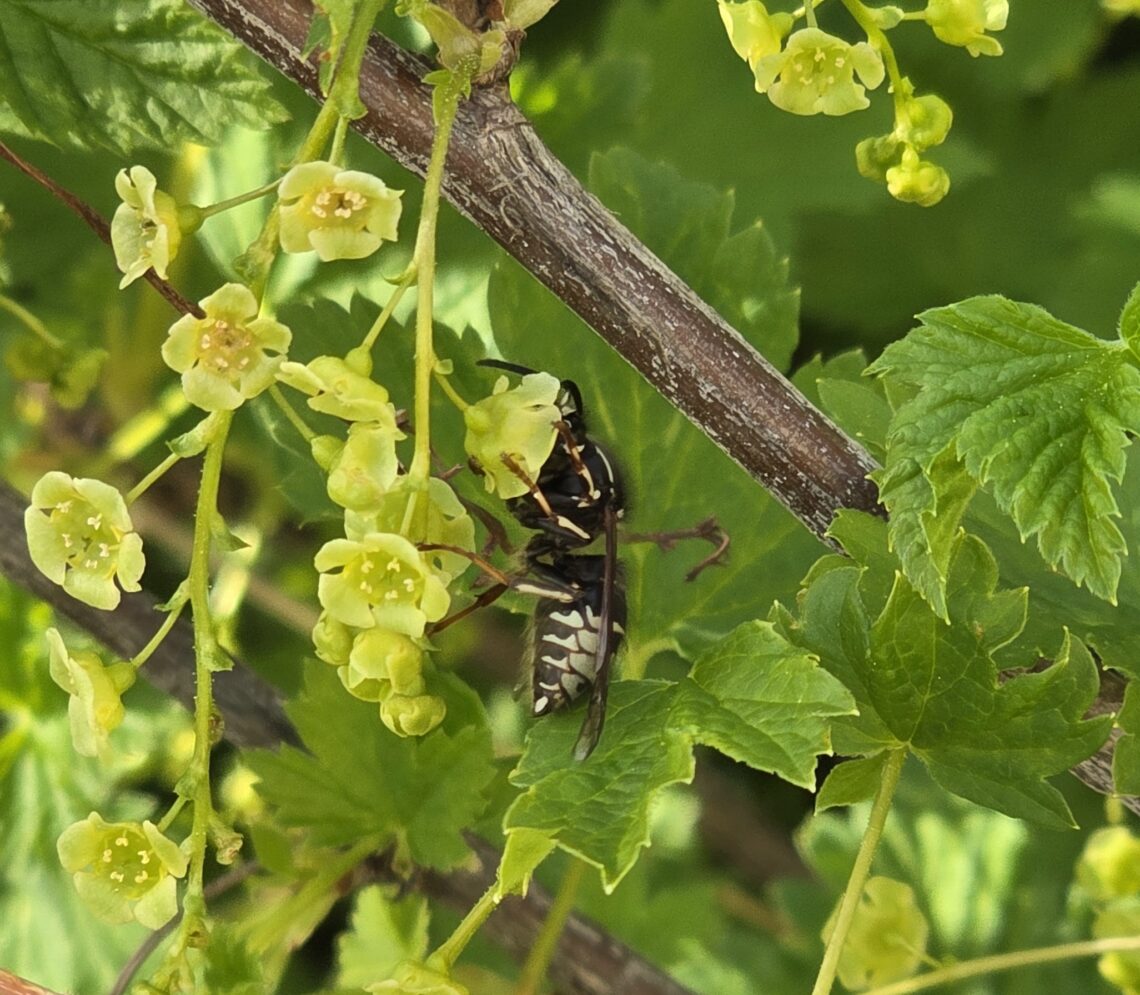
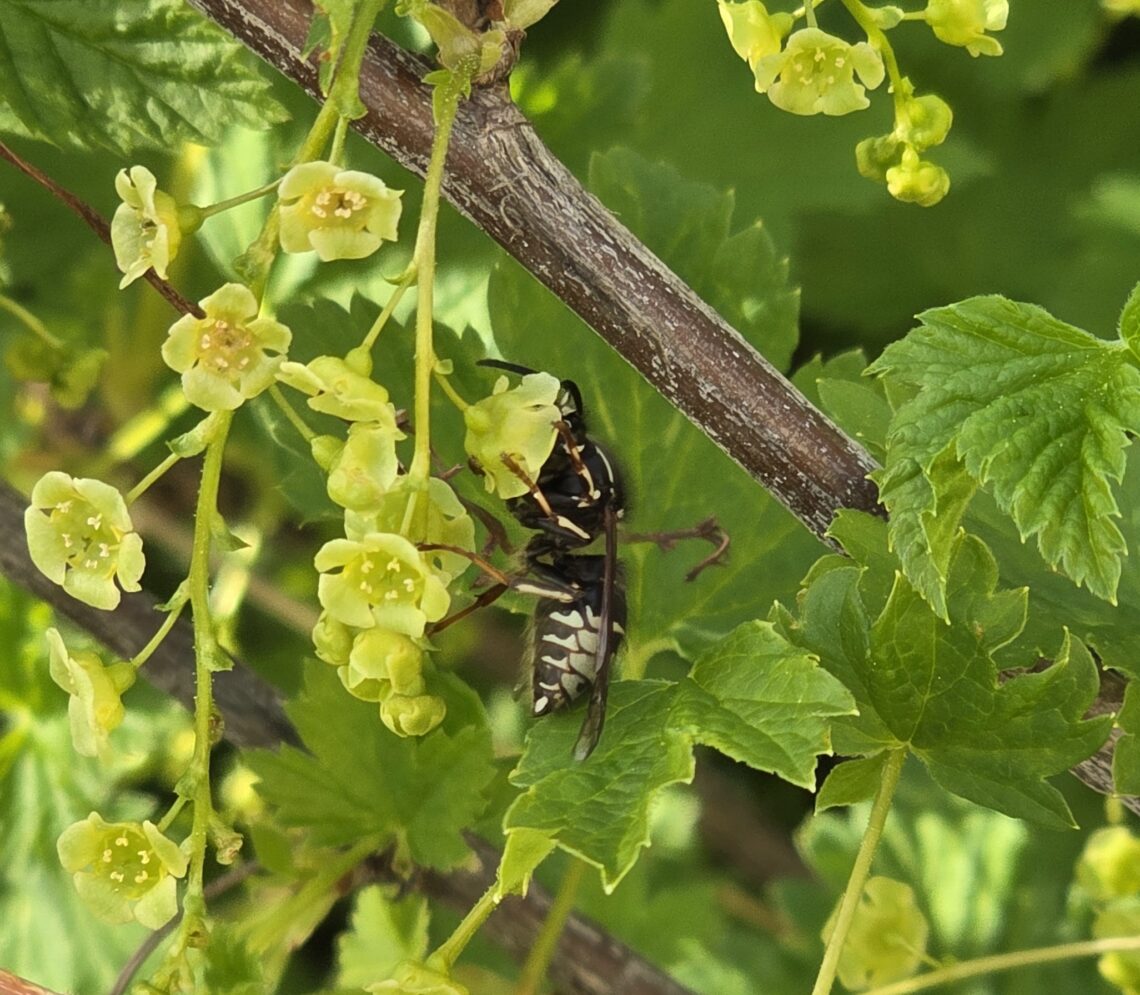
Earlier this month, as I knelt in front of my currant hedge on one of my evening forays into the garden, I watched as four species of yellowjackets bustled from flower to flower. I couldn’t help but enjoy the process. First, the yellowjacket clings to the flower as it sways from her weight when she lands. Once steady, she cups the flower with her feet and buries her face inside, much the way a small child might hold a cereal bowl to their face to slurp the last of the milk.
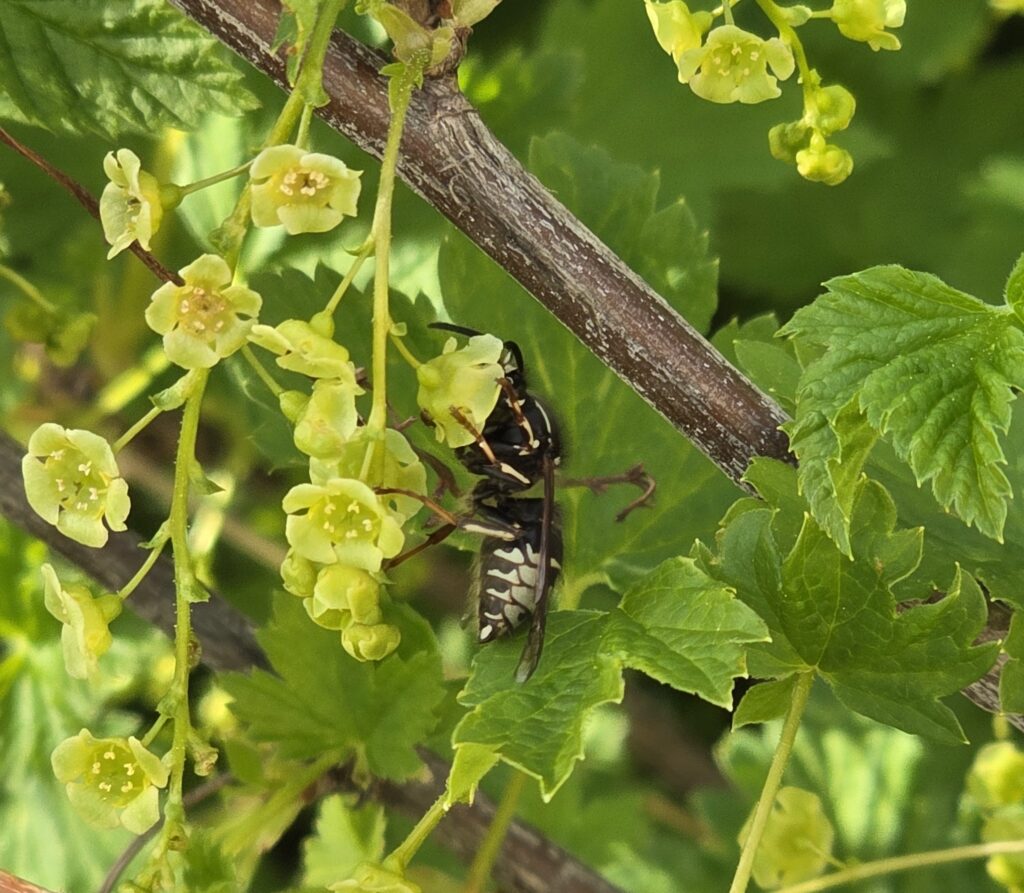
An arctic aerial yellowjacket (Dolichovespula arctica) sipping nectar from a currant flower.
In addition to their pollination services, yellowjackets are also excellent predators of other insects, offering pest control services for our garden, free of charge. Further, as most fisherfolk can attest, yellowjackets are excellent scavengers, helping to break down carrion and return those nutrients back to the soil. Yellowjackets are incredibly important for the health of our gardens, forests, and meadows.
While many of us have suffered the swift consequence of disturbing a yellowjacket nest, I can’t help but consider the double standards we apply to these insects. Most of us are not fleeing in fear from a bee zipping by or resting on a flower, yet a yellowjacket is no different. Bees and yellowjackets alike will sting if their nest is disturbed, or if they are accidentally trapped against the skin. Contrary to popular belief, neither are defensive of flowers.
As I write this, my big toe sore and swollen from a honey bee sting I received while watering my garden yesterday, I wonder, what if we chose to give yellowjackets more of the same grace we give bees?
In my garden, the consequences of being ungracious to yellowjackets are clear. Without yellowjackets, I would lose one of my greatest treasures – opening a jar of red currant jelly during the coldest depths of winter.
For those curious to learn more, I highly recommend the book Bees, Wasps, and Ants: The Indispensable Role of Hymenoptera in Gardens by Eric Grissell.
Alexandria Wenninger is an entomologist, with a soft spot for wasps, who studies insect-plant interactions and works at the University of Alaska Fairbanks Cooperative Extension Service.
