By Marisa McKasson
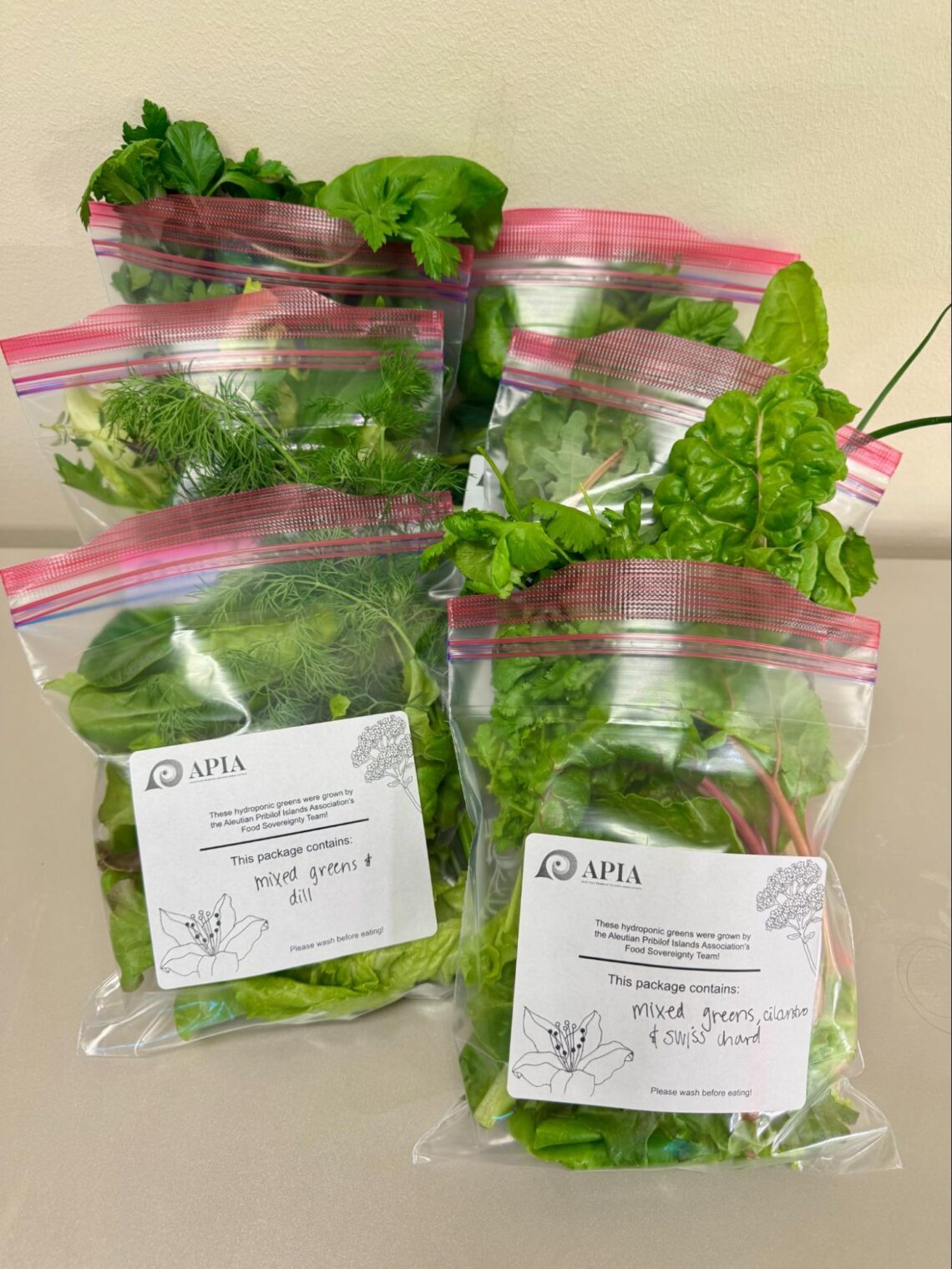
The dark days and cold weather of Alaska’s winter solstice season don’t exactly scream “gardening.” But what if your new winter hobby could produce fresh lettuce, greens and herbs of quality and quantity a barge or an air shipment could never provide?
Hydroponics, a form of soilless gardening, uses water to deliver the nutrients plants need to grow. It can be done indoors or outdoors and is an excellent option for anyone who wants to grow herbs and vegetables throughout the winter (or year-round in cold, windy places like the Aleutian Islands). You don’t need outdoor growing space, sunlight, warm high-quality soil, or extensive gardening experience to get started.
Despite some common misconceptions — such as the idea that all hydroponic systems are large, complicated or require lots of expensive electricity—many small-scale, accessible options exist. This article introduces those options so you can feel confident starting at a level that works for you and your community. It will sum up with some advice on maintaining hydroponic units in rural Alaska from the Alaska Food Policy Council (AFPC) Hydroponics Working Group.
Starting small: countertop systems
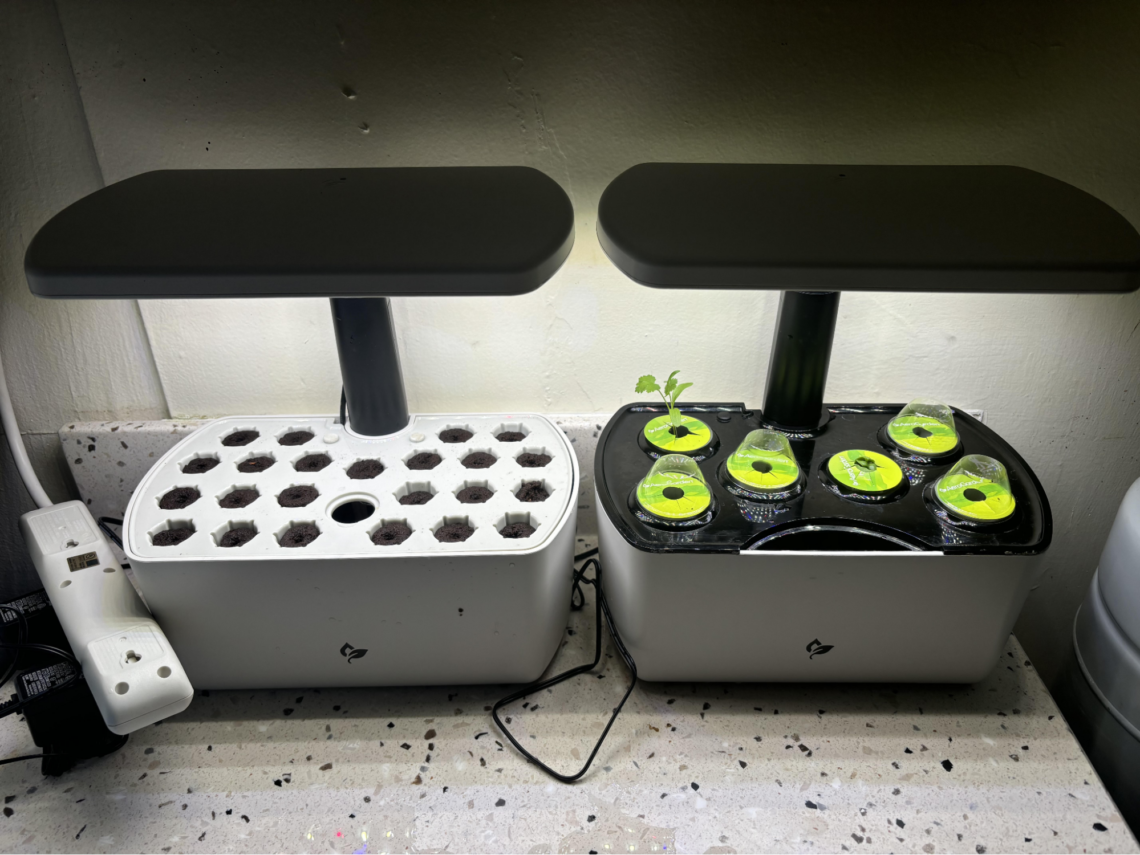
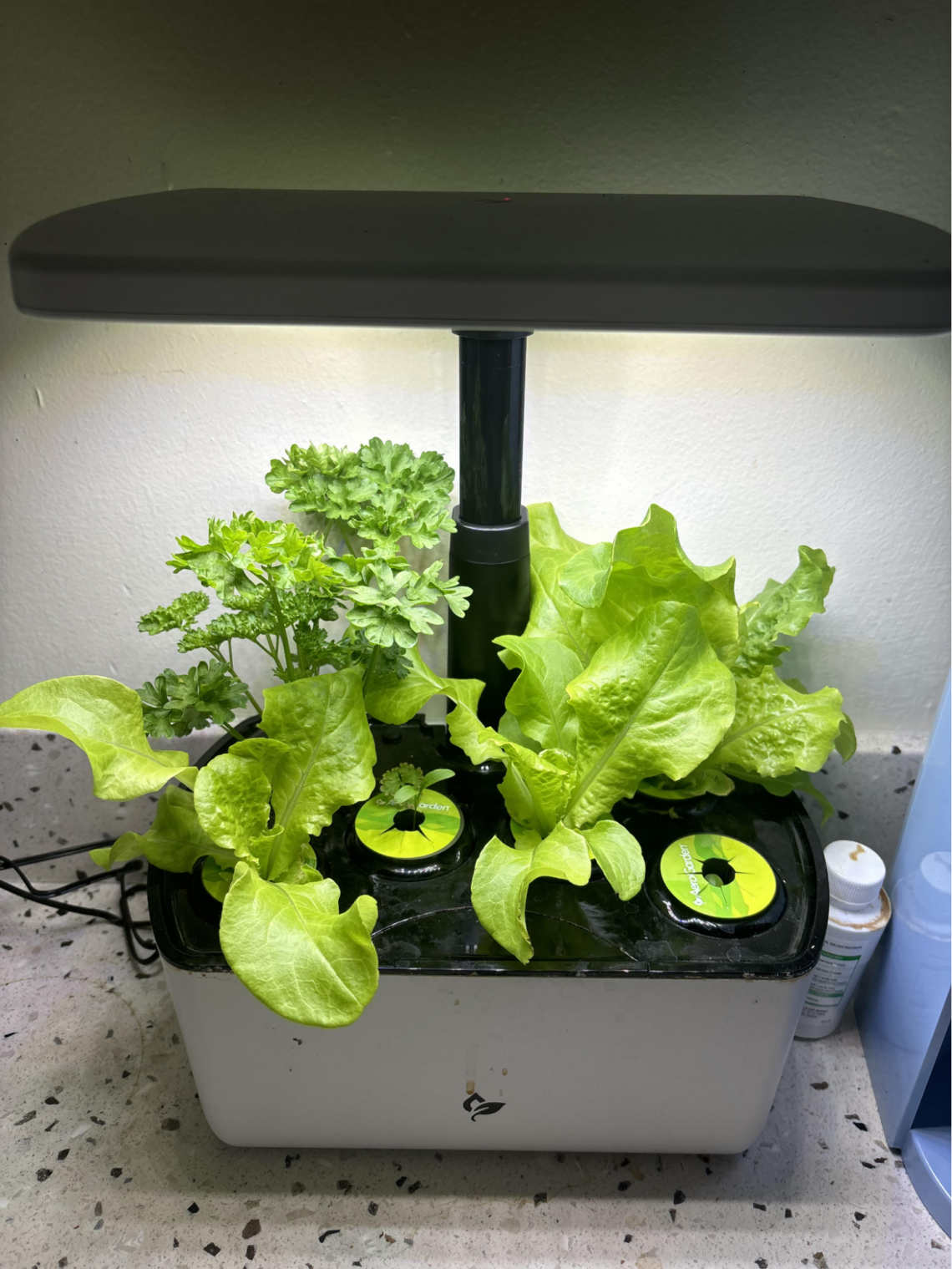
Don’t have a lot of space at home? Unsure how often your family will eat greens? Start small with a countertop hydroponic grow system. Hydroponics enthusiasts will often throw out technical terms or acronyms like NFT (nutrient film technique), substrate and aeration. But you can start small without knowing this jargon.
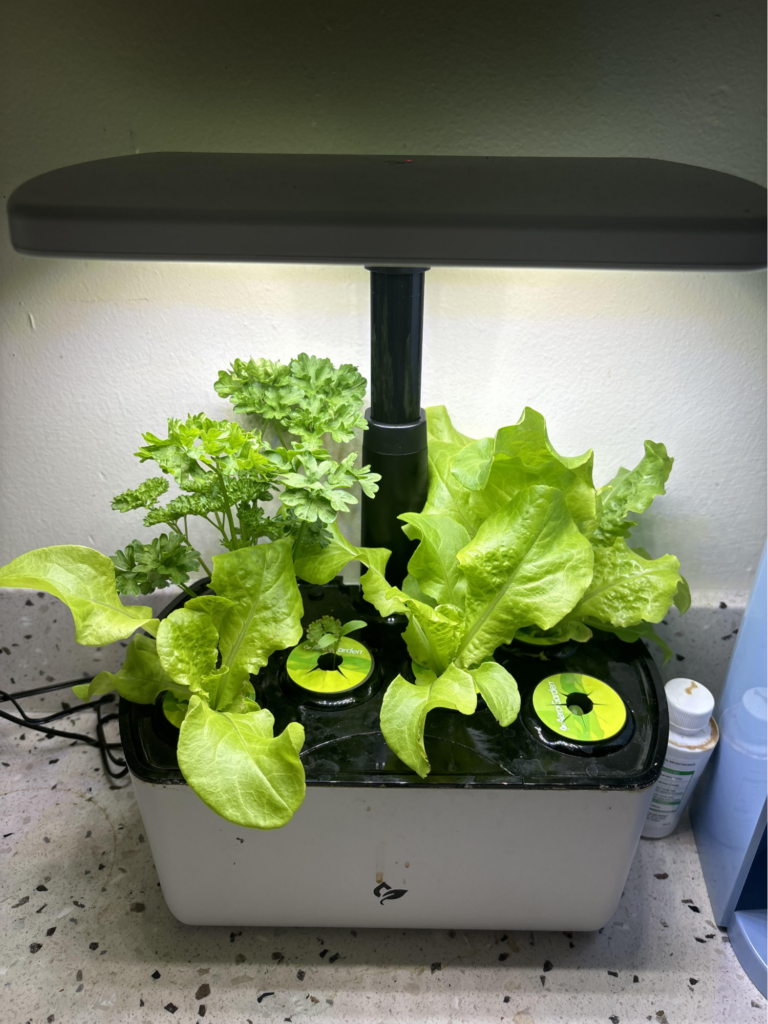
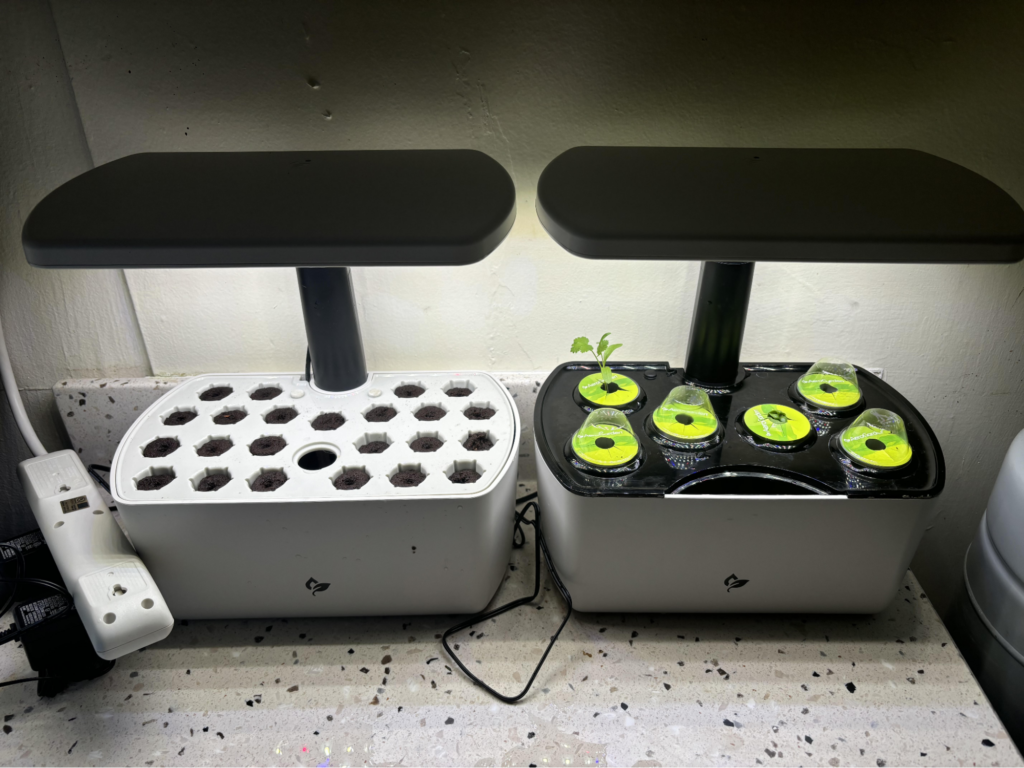
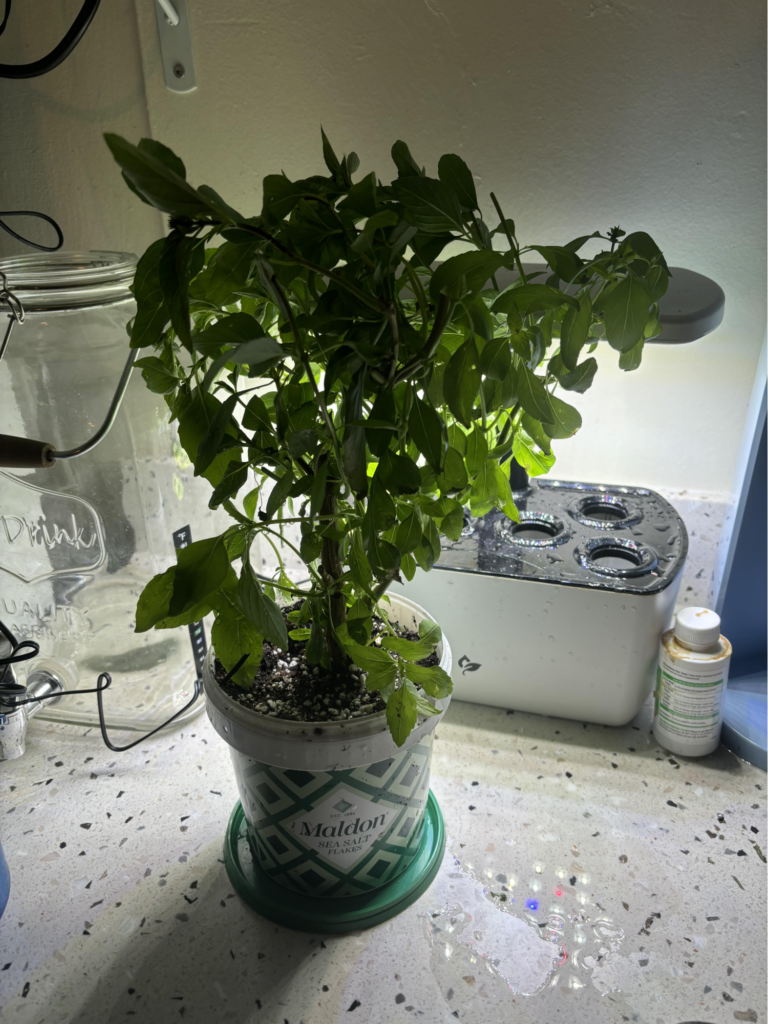
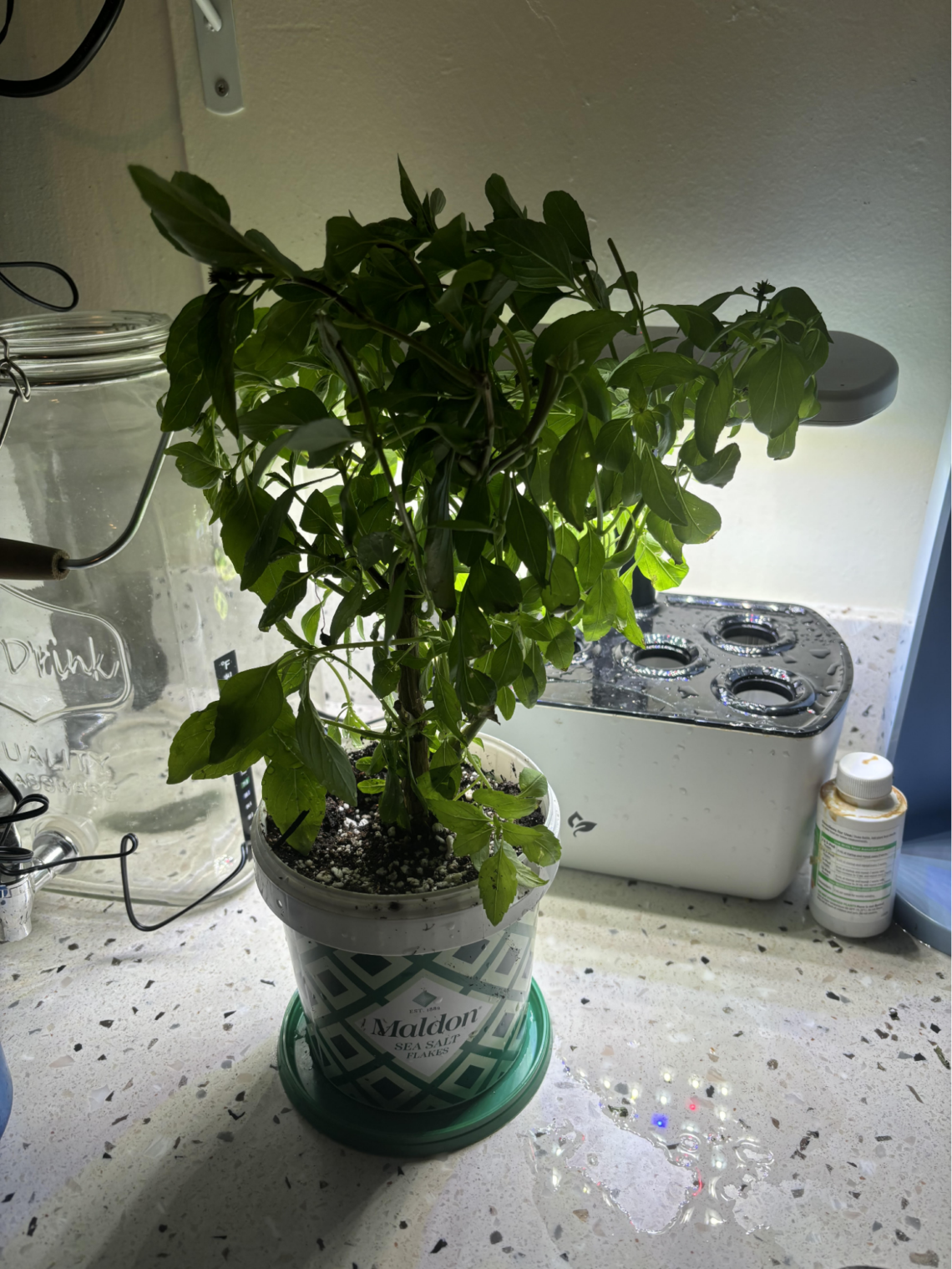
You can use countertop units to start seeds for transplanting outdoors or plant them into indoor containers, right, when the roots get too unruly for the unit.
Countertop units range from about $40 to several hundred dollars. Most are compact versions of a “deep water culture” system, where plant roots sit in water enriched with nutrients. These kits often include growing media, plant food and easy-to-follow instructions, so you can simply click “buy” and learn as you go. A note that while often marketed for crops as diverse as tomatoes and eggplants, lettuce and herbs are better suited to this type of system. They do not require pollination, and their roots are less likely to clog up the small system.
Medium-sized methods to increase production
Ready to scale up, both your production and personal investment in growing hydroponically? Some of the most common medium-sized solutions include:
- Grow towers
- Usually best for shallow-rooted plants, such as lettuce and herbs.
- Options for lighted or not are often more successful with built-in lights.
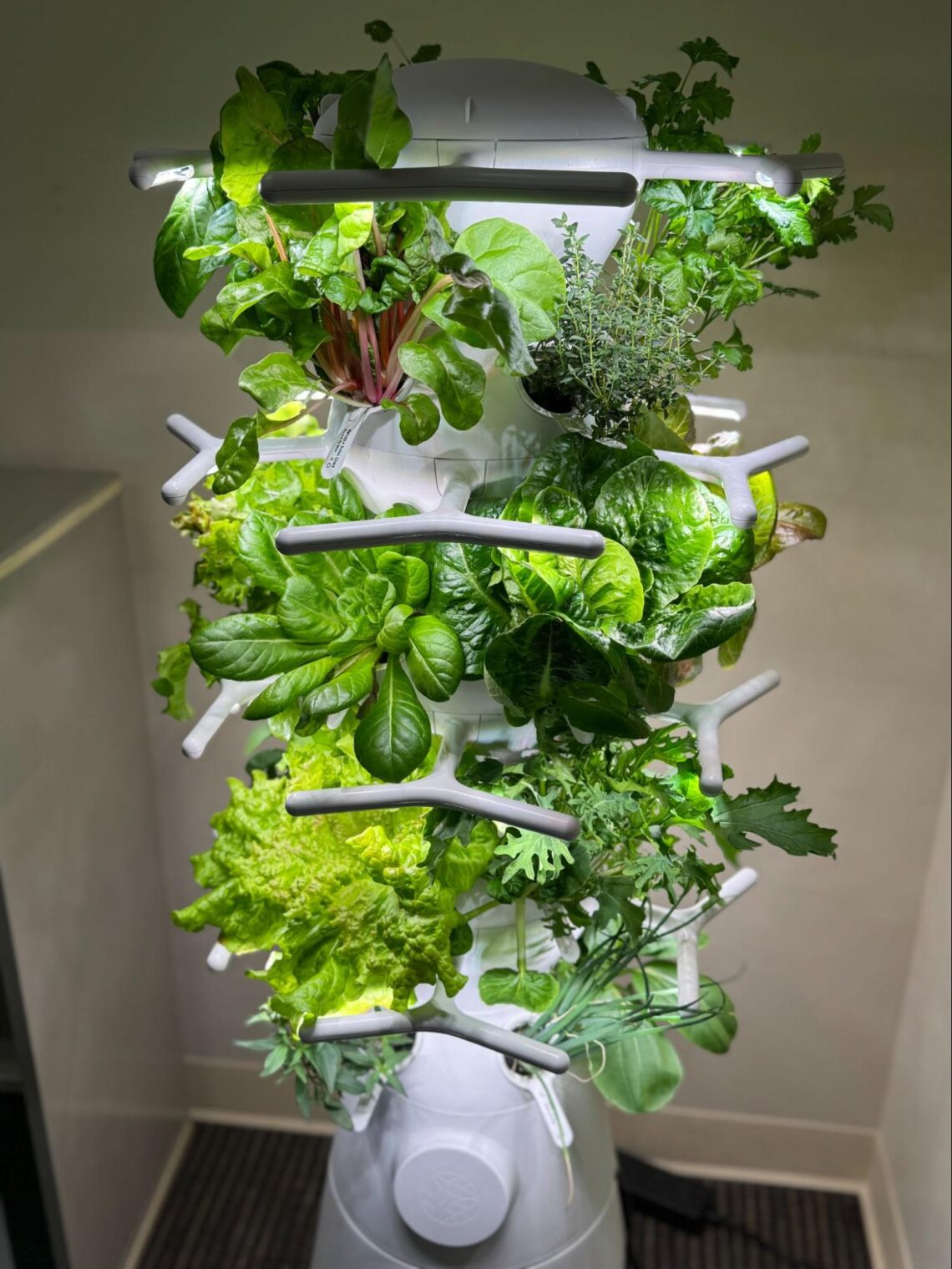
- Usually have 15-30 grow sites and can produce a lettuce crop approximately every six weeks.
- Dutch buckets
- Great for larger plants such as tomatoes and cucumbers, or larger plants like eggplant and zucchini.
- See more information in this Oregon State Extension article.
- Deep water culture
- Accessible hydroponic method that’s easy to understand and implement. See this Oregon State Extension article.
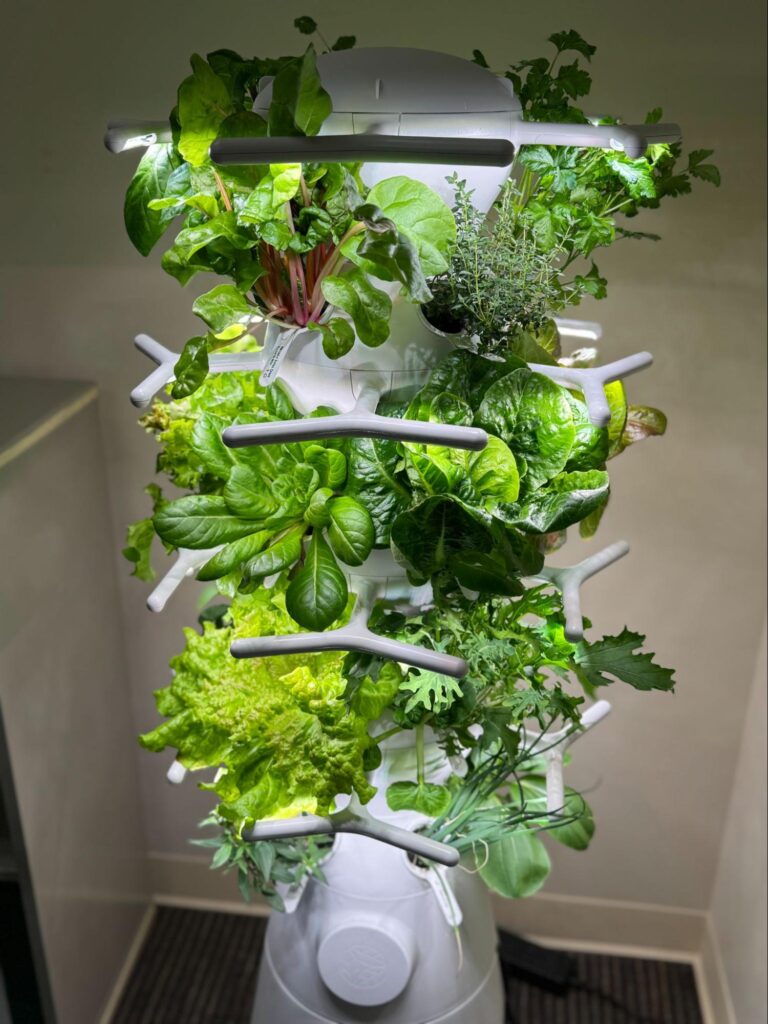
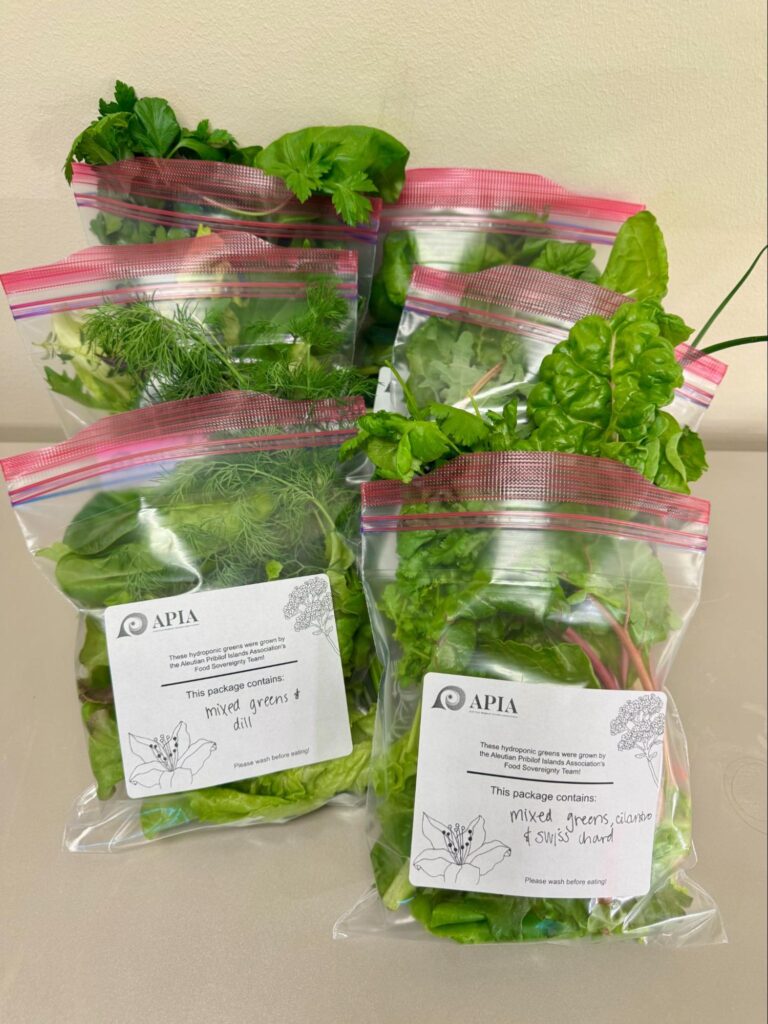
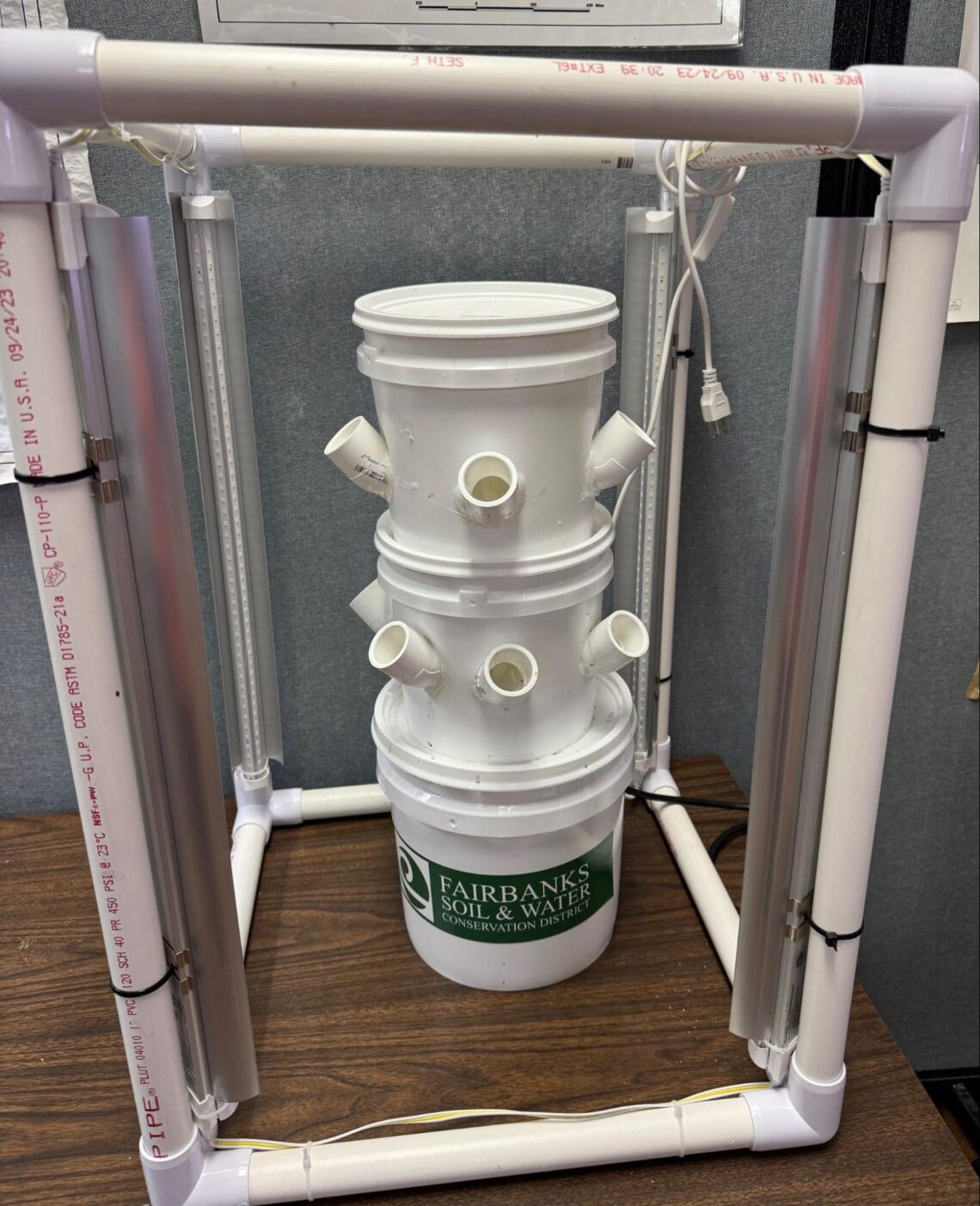
The APIA Food Sovereignty team’s grow tower, which is used to provide fresh greens for Elders and staff.
Many commercial options for medium-sized methods exist, but you can also build a system yourself. See Fairbanks Soil & Water Conservation District’s hydroponics webpage for more information on how to build your own hydroponic grow tower or deep water culture system.
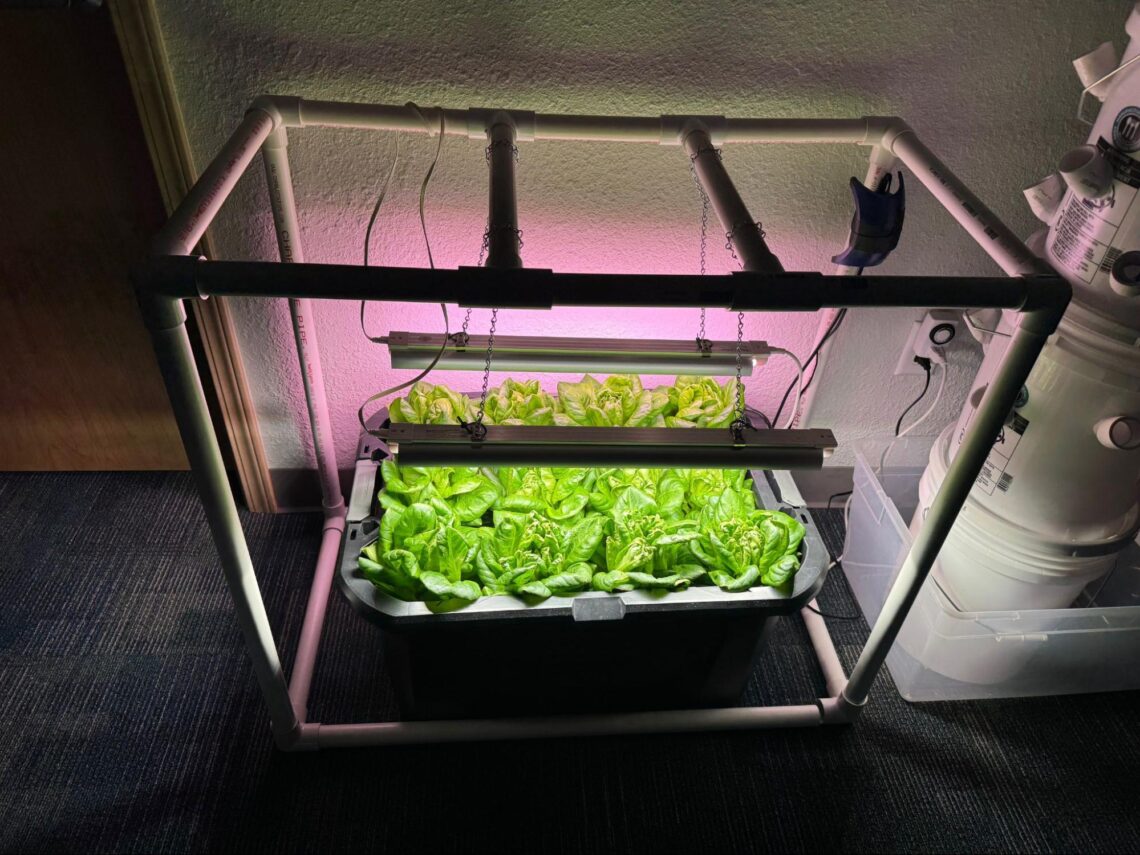
Many people in rural Alaska worry about the electricity needed to run the lights and pumps in a hydroponic system, but the power demand is often quite manageable. For example, the Lettuce Grow Nook (with 16 grow sites) used by the Aleutian and Pribilof Islands Association (APIA) Food Sovereignty team consumes roughly 1.3 to 1.6 kilowatt-hours per day. That translates to an estimated monthly cost of approximately $14–$22, depending on local energy rates.
Some other models require even less electricity. At that rate, APIA’s unit can produce more than 100 heads of lettuce per year for just $14–22 a month in electricity costs. These medium-sized units are a great way to test electricity and other input costs while still getting a substantial harvest before investing in a large or commercial system.
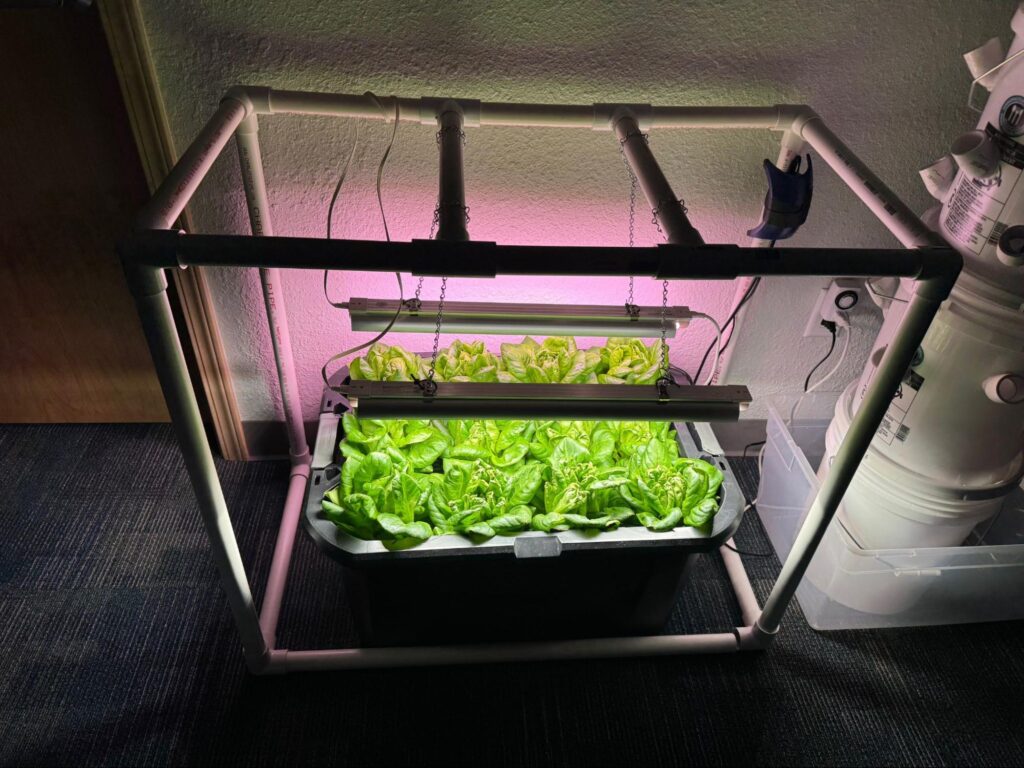
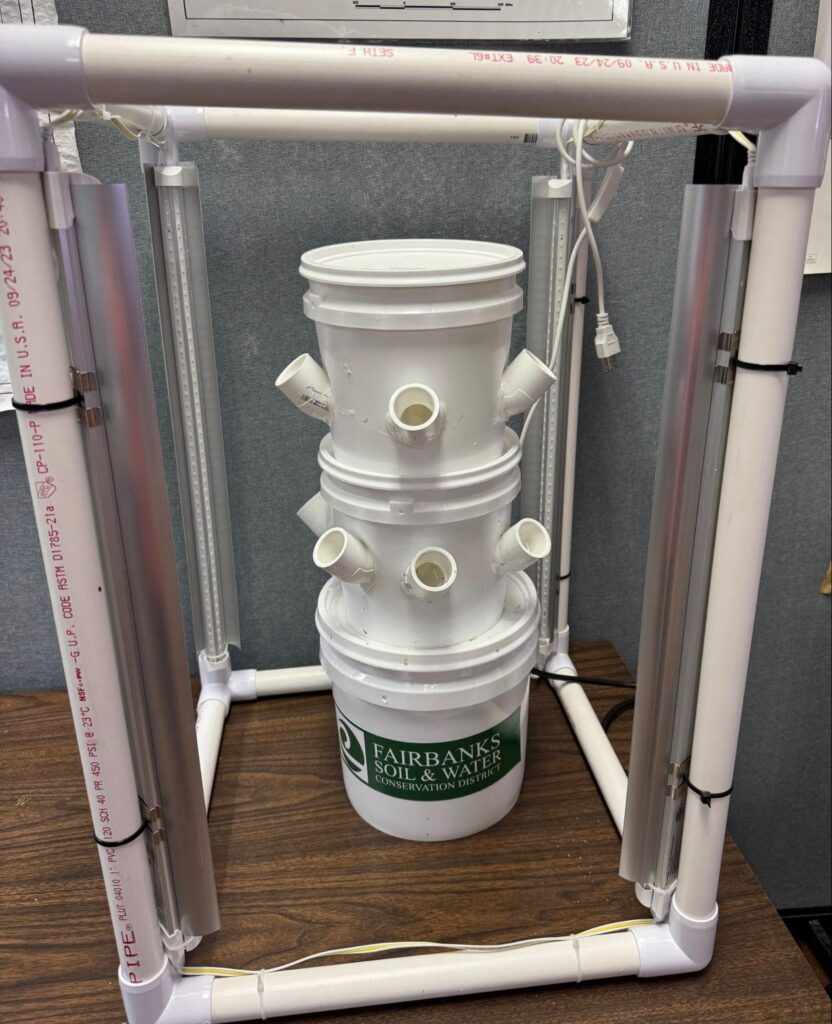
Homemade tower and deep water culture systems from Fairbanks Soil & Water Conservation District
Advice from the AFPC Hydroponics Working Group if you want to scale up your hydroponic growing:
- Reach out to your local Cooperative Extension or Soil & Water Conservation District offices to learn more about the type of hydroponic system you are thinking about implementing.
- Ensure you will have the labor needed to utilize whatever system you choose. Labor is the No. 1 constraint to village gardening and growing.
- Purchase or build systems without proprietary parts (hydroponics businesses can be known to go out of business).
- Buy extra parts when you initially purchase your system (pumps, etc., go out often), which ensures you can keep growing without waiting for orders or additional grant funding.
- Make sure systems are set up correctly from the get-go! Most problems arise from incorrect setup. If you are purchasing large-scale community or commercial systems, it can be worth it to pay to have an expert handle setup.
- Build community around growing. Encourage others to grow hydroponically, use hydroponics to teach students, or join the AFPC Hydroponics Working Group!
The Alaska Food Policy Council Hydroponics Working Group meets virtually on the third Wednesday of every month at 2:30 p.m., and you can sign up to attend on the Alaska Food Policy Council website.. Every meeting, we try and have a guest speaker to discuss hydroponic growing across the state. You can view the past meetings on YouTube.
For more detailed information on growing hydroponically, feel free to reach out to the Aleutian and Pribilof Islands Region Extension agent Marisa McKasson at mnmckasson@alaska.edu. Tons of great online resources also exist for hydroponic growing. You can start with the following:
