By Art Nash
With around 20 days of cumulative rain in August and above-average precipitation in September, the ground was fairly saturated outside when freeze-up began. But what about inside? That is, what about the relative humidity in your home? Do you know how dry or how moist it is in your home from a gauge on your thermostat?
Home environment pros peg the optimal window for humidity when a home is around 40 degrees Fahrenheit to almost 60 degrees. This is from the perspective of which irritants to homeowners’ health tend to thrive.
When the moisture level is lower, respiratory tracts tend to dry out. Airborne transmitted viruses can linger in drier air than in wetter and heavier environments. When levels exceed this 40-60 degree span, molds can start to thrive.
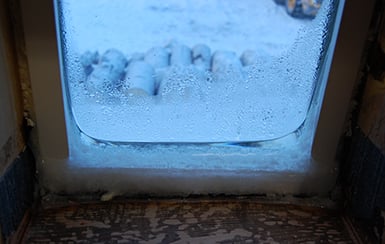
One way to determine if the ambient humidity in a home may be higher than the ideal sweet spot is by checking for the presence of condensation on the inside of the windows in the exterior wall(s) of your home. When water droplets bead up, which may lead to small rivulets of water running down the glass in freezing weather, you may see a layer of ice in the bottom corners where the window pane meets the glass.
Sometimes ice will coat the flat inset sill board. Similar iced-up condensation can occur where there are no windows but merely drywall, such as inside corners where exterior walls meet with beds or bookcases along the walls on two sides. When the weather warms up outside, it is a good idea to soak up the moisture or use a shop vac to remove excess water.
You can also simply pull the moisture from your window by directing a fan across the interior pane of glass. By reducing the humidity in your home overall, you can decrease the temperature and run a ventilation fan in high-humidity areas, such as the bathroom or over cooktops.
You can also purchase a dehumidifier (which requires being periodically emptied of water). While the icing over of windows may merely be a nuisance, as you can’t see clearly what is going on outside, it can cause issues when condensation gets into the wall cavity around the window and creates freezing expansion and thawing contraction.
When the humidity level ends up below the optimal 40 to 60 percent span, you may want to use a plug-in humidifier to keep bedrooms more moist for respiratory reasons (or you can use equipment that will deal with the whole dwelling).
When I was a youth, our nearly century-old, very dry, ranch log home (at almost a mile and a half high) had an open floor plan. When it came to interior heating, we had a large cast-iron, oval woodstove in the center, which we heated with. There would always be a large pan of water steaming on the flattop, which was adjacent to a large square red brick chimney in the middle of the main room (which we always kept full before it sizzled, empty of water). This no-tech method was how we kept the indoor air moist and breathable without mechanical or electrical equipment.
Nowadays, digital monitors are readily available for as little as $10 and can alert you to low ambient moisture levels or even trip a humidistat to activate a humidifier or dehumidifier, similar to a wall thermostat connected to your furnace.
Keep your home humidity levels down while different living activities are taking place inside. This can help you keep your home comfortable and healthy!
Art Nash is the energy specialist with the UAF Cooperative Extension Service. For more information on Healthy Homes topics, contact him at 907-474-6366 or alnashjr@alaska.edu.
