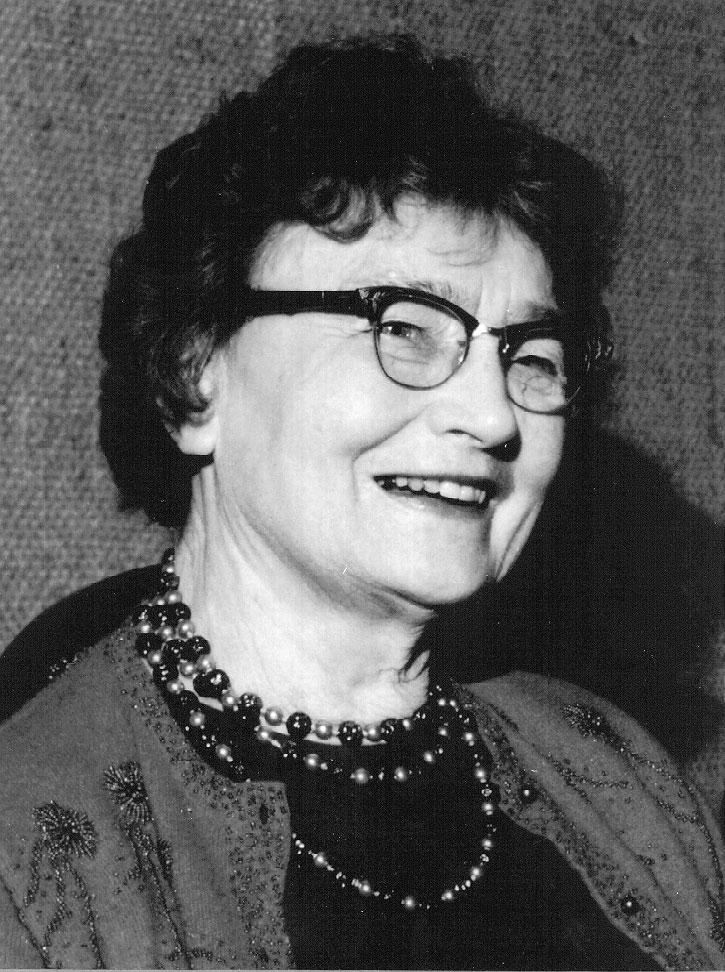
March is National Women’s History Month and is intended to celebrate women’s contributions to history. We decided to celebrate Lydia Fohn-Hansen, who was an integral part of the Cooperative Extension Service’s beginnings in Alaska.
Lydia Fohn-Hansen came to Alaska in 1925 after seeing a notice on a bulletin board that Dr. Charles Bunnell, then the president of the University of Alaska, needed home economics teachers. It wasn’t until 1930 that the Cooperative Extension Service was established, but Lydia was doing Extension-style work as soon as she came to Alaska.
In the pioneering years of Extension work, Lydia Fohn-Hansen, as home demonstration agent and 4-H agent toured the state carrying teaching supplies, clothing, bulletins, pressure canner, can sealer, patterns, garden seeds, needles, yarn and probably a loom, on trips of up to three months or so. She traveled by dog team, by train, by plane, by boat and on foot.
When the Matanuska colony was started in 1935, Lydia was there working out of a tent. She spent two months traveling to communities in the area teaching colonists how to preserve berries, care for fish and game, how to use powdered milk, how to keep their homes and families warm.
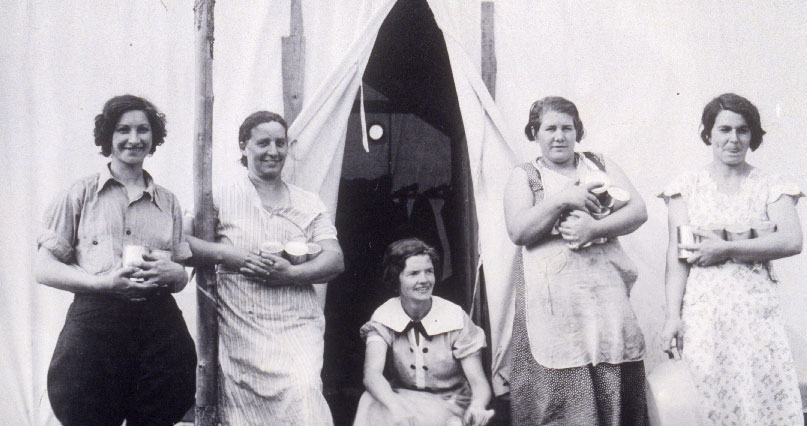
During her nearly 30 years with Alaska Extension, the influential agent wrote hundreds of publications and 4-H project books. As Extension’s sole home economist, she toured the state carrying teaching supplies, clothing, bulletins, pressure canners, can sealers, patterns, garden seeds, needles, yarn and often a loom. She also reached out to Alaskans by newsletter and radio programs and initiated the first Extension television programs in 1955.
After retiring in 1959, Fohn-Hansen stayed active in the Fairbanks community until 1975, when she moved to Washington State. She died in Lacey, Washington, on Nov. 6, 1986 at age 95.
Sources:
