
By Leslie Shallcross
Food and good health are inextricably linked with numerous studies showing that food patterns including lots of fruit and vegetables lead to best health. If you can’t get them from your own garden, buying seasonal fruits and vegetables is recommended for getting the most nutritional benefits. You may also use frozen or canned as these retain many of the nutrients and beneficial plant compounds. University of Alaska Fairbanks research has shown that berries, fresh or frozen or prepared as jam or fruit leather, are all nutrition powerhouses.
Whether fresh, frozen or canned works best for your budget and cooking style, adults should aim for about 1 ½ cups of fruit and 2-3 cups of vegetables per day. Currently in the U.S., only about 10-12 percent of adults meet the guidelines, with even fewer children getting recommended amounts.
Berries are nutrition stars in the produce section. In both clinical trials and population studies many types of berries — including strawberries, raspberries and blueberries — reduce risks for heart disease, diabetes, cancer, being overweight and dementia. Eating strawberries twice a week has been linked to lower blood sugar levels as well as many other health other benefits.
If you hit the grocery store at just the right time, you are likely to be greeted with displays of deep red, fragrant and health-promoting strawberries. With our foods coming from around the world, we see them in the market almost any time. But mid-spring is the time when you are likely to find the best buys on the freshest, nonlocal strawberries. These can be quite satisfying and delicious but because they are shipped, usually from a great distance, they are rarely as flavorful as a locally grown, just-picked berry.
Alaska is famous for berries (at least Alaskans think so), perhaps more so for the many wild blueberries, salmonberries and cloudberries than for strawberries. Wild strawberries — mountain strawberry (Fragaria virginiana) and the beach strawberry (Fragaria chiloensis) in Alaska — produce wonderful small, sweet berries but are generally not abundant in Interior Alaska.
Strawberry aficionados who want the fresh off-the-vine taste will have to wait until early to mid-July and pick some up at a farmers market or pick-your-own farm. Alternatively, you might give growing strawberries a try. This can be done in a sunny location in containers or raised beds or in a well-prepared garden plot.
Picking a variety known to grow well in Interior Alaska is your most important step: Cooperative Extension Service horticulturists recommend Quinault, Albion, Seascape, Tribute, or Tristar. Most people buy new plants each year as even the “winter- hardy” varieties will only survive in beds that have some temperature-moderating aspects. Check with your local greenhouses for this year’s plants and check with Cooperative Extension for additional growing instructions.
Strawberries are perishable and will keep best in a moderately cool refrigerator in a ventilated container. Do not wash them until you are ready to use them. But remove any moldy or bruised berries from the container before storing them.
Combining strawberries with Alaska pie-plant (rhubarb), which bears edible stalks from mid-June through July is a great way to use fresh or frozen strawberries (my mouth is watering thinking about that pie). Since nutrition is what we are after, there are lots of other, lower-sugar ways to use strawberries – throw in smoothies, slice on a salad or atop pancakes, or add them to your scones or biscuits.
To really up the culinary ante, try roasting strawberries, making a strawberry salad dressing, or nutritious and beautiful strawberry toast for breakfast, lunch or snack.
Move over avocado toast … a serving of strawberry toast can be made with a slice of toasted whole grain bread, ¼ cup cottage cheese blended with 1 teaspoon of honey, birch or maple syrup and 1 teaspoon orange or lemon zest, 2-3 sliced strawberries, 1 tablespoon of pickle relish, 2 teaspoons minced fresh basil or mint (½ teaspoon dry), and 1 tablespoon chopped pecans. Spread the toast with cottage cheese mix and top with strawberries, relish, herbs and chopped nuts.

I love a sweet and sour fruit-based dressing. It can be used on green or grain salads, seafood or chicken. Use a blender or a whisk and combine ½ cup roasted strawberries, ¼ cup white balsamic vinegar, 1/8 teaspoon of salt, a pinch of black pepper, 1 tablespoon honey, 1 teaspoon of crushed garlic, ½ teaspoon of prepared mustard, ¼ cup of cottage cheese and 2 tablespoons of olive oil. Adjust as seasonings to your own tastes.
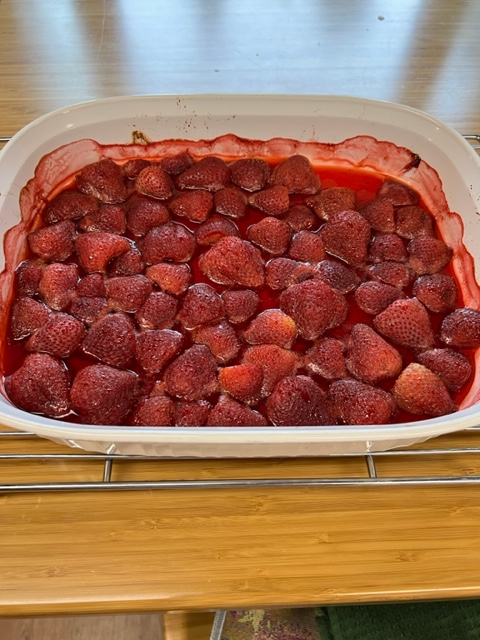
If you don’t just eat all these immediately, roasted strawberries can be used for dessert toppings in salads, or in sauces and dressings. To roast strawberries, trim and halve 1 pound of berries and place in a roasting dish, and toss with 1/8 teaspoon of salt, 3 teaspoons of sugar and ½ teaspoon of vanilla. Roast in a 375°F oven for 20-30 minutes. Keep them in the refrigerator after they cool.
Summer is a great time to think about hitting the recommended number of fruit and vegetables servings each day. For more ideas about using strawberries or any of our delicious and nutritious Alaska produce, contact UAF Cooperative Extension, 907-474-5200 or check out our website, www.uaf.edu/ces.
Leslie Shallcross is a registered dietitian and the Cooperative Extension Service Tanana District’s Health, Home and Family Development agent.
