By Art Nash
There’s an acronym amongst those who study the rapid complexity many communities are facing in regards to wildfires.
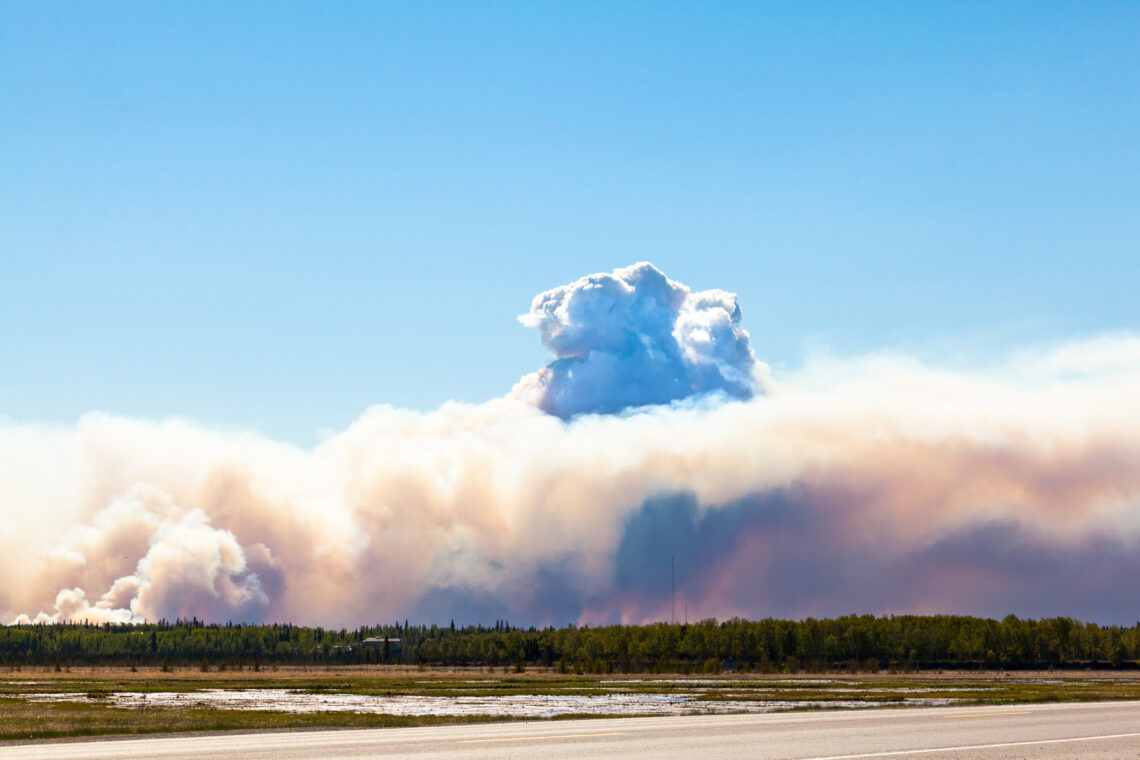
It is WUI, standing for Wildfire Urban Interface. It is where built-out areas meet and intermingle with grasslands, forests and abundant shrubbery. WUI concerns basically look at protecting life, limb and property in built up areas. Alaska firefighters often take their work this time of the year (and the next several months) to hotspots in proximity to homes and businesses while mapping supply logistics, neutralizing biomass fuel on the ground and safely coordinating with homeowners and renters.
In looking at governor-declared (Alaska) disasters during 1976 to 2024, a sixth to a third of the wildfires could be considered “WUI” fires. The majority of the others were in areas of village enclaves. With these kind of fires, whether it involves U.S. Forest Service Hotshots or local/volunteer fire departments, the social or human interactions have to be considered along with the fire dynamic principals involving wind, moisture and combustible items.
Currently, Southcentral Alaska especially has a growing concentration of urban area which is surrounded by forests that increasingly have dead standing spruce timber among low humidity rates. This often leads to increases in the dryness of the active layers of soils, ground fuels, fire frequency as well as the length of fire season.
Thus, there is a place across the general population and public professionals to work with each other. Sometimes it might be your Local Emergency Planning Commissions, rural volunteer fire service, or local government, which determines priorities between fire and residents. Talk to your local fire protection people and see if they have done a pre-fire assessment that includes your subdivision or neighborhood.
If so, look especially at mitigation interventions noted and post-burn recovery plans that can be shared around and shared so that in the whole there is the least long-term impact from wildfire. Some known interventions include getting ahead of the burn, and building up different barriers around perimeters of land with variable terrain and types of vegetation. This might mean removing plants for rock gardens or even building earthen rows. Vegetation type can effect what kind of fire comes through (as far as how high up the combustible biomass will be so as to effect roofs and eves, or in some cases foundations and doors).
Dialogue between individual homeowners and their local responder agencies is key in protecting your home. At the same time, it is also important to communicate at the village or community level in places where limited access roads and rivers are the main ways in and out of built up rural areas.
There are some situations residents don’t have control over such as moisture levels and wind. But there are some they can effect such as how pervasive harmful bugs are on their property, what biomass is available to burn or what measures of water or chemical response they have on their dwellings. And of course, efforts of communication with local firefighters is something that is within most homeowners grasp!
If you have questions on wildfire emergencies and how to prepare your property, you can contact Art Nash at alnashjr@alaska.edu.
Art Nash is the statewide UAF Cooperative Extension Service energy specialist.
