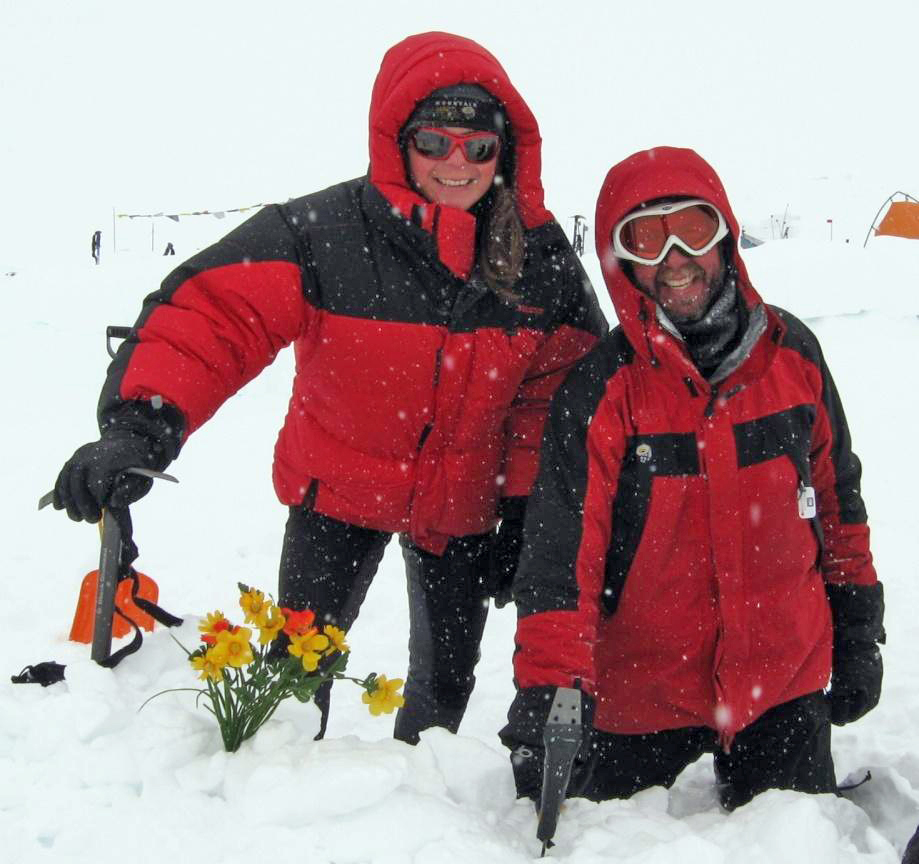
This column is in memorium to Stephen Brown, who died unexpectedly in his sleep at his home in Palmer, Alaska, on Feb. 23. It is quintessential Steve — tying together his love of agriculture, adventure, mountain climbing and zany sense of humor.
By Stephen Brown
Mat-Su/Copper River District agriculture agent
Nationally, the Cooperative Extension Service and its Master Gardener Programs have done a pretty good job reaching the diverse needs of gardeners across the nation. Be it Key West, Florida, or Kenai, Alaska, you can find gardening information for virtually any location … or so we thought!
It turns out that almost no information exists for mountaineers wishing to garden while attempting to climb Denali. How this need was missed for so long is a mystery, but the University of Alaska Fairbanks quickly dispatched two ag/hort agents (myself and Heidi Rader) to the 14,000-foot camp to assess the needs of this overlooked population.
As suspected, we found virtually no evidence of gardening activity anywhere on the upper slopes of Denali. After interviewing many mountaineers as to why they did not liven their camps with gardens or supplement their food supply with fresh veggies, their puzzled looks and frequently repeated expletives made it evident they simply had no knowledge of glacier gardening. The following tips should be useful for gardening on North America’s tallest mountain:
1. Contrary to popular belief – wind, not cold – is the gardener’s biggest enemy on Denali. Windbreaks that can withstand sustained 120 mph winds are crucial to a successful garden. For this reason, it is especially important that hardening off plants not be skipped. Also important is for the Denali gardener to remain roped up for safety while gardening.
2. Despite repeated attempts, we did not find that raised beds or mounding significantly increased planting temperatures. The easy solution to this problem was to place chemical hand warmers beneath the root system. However, they do have to be replaced about every 8 hours. We calculated that a typical 90-day cherry tomato plant would require approximately 4,000 hand warmers to go from germination to fruit. Expensive? Yes, but we found many climbers who would be willing to sell their souls for a fresh tomato.
3. We did not find insects or diseases to be a problem on Denali. This stunning discovery has big implications and may mean our biggest mountain could also become our biggest bread basket! Of course, there is the small issue of commercial farming not being allowed in a National Park, but that should be a small matter for Congress to fix.
4. It is a common misconception that organic gardening is not possible on Denali. Nothing could be further from the truth! Socks worn for a week provide all the nutrients needed to support healthy plants. Simply pour warm water through you socks to produce nutrient rich “sock tea”. However, don’t be tempted to try this with underwear worn for 3 weeks. Compost them first as they may burn your plants.

Jerri
March 21, 2025 — 8:12 pm
This is precious! Thank you for sharing. Steve will be missed.