By Reina Hasting
It’s New Year’s resolution time again. There are many great ones, but sometimes, having so many to think about can be overwhelming, so it may be helpful to consider having just one resolution.
Since most New Year’s resolutions are related to health, I suggest rethinking your drinks for yourself and those you care for. Many drinks, such as soda, juice, tea and energy drinks, have added ingredients our bodies don’t need. For this column, we’ll look at added sugars. Awareness of how much sugar a drink contains can help us be healthier and avoid added calories and the negative impact of too much sugar on our daily lives.
The Centers for Disease Control and Prevention states that 3 in 5 Americans ages 2 and older consume more than the recommended amount of added sugars, and the primary sources of added sugars come from drinks and food. More specifically, 24% is from sugary drinks, such as soft drinks, sports and energy drinks. Another 11% is from coffee and tea that is sweetened before sale or added later, 19% from desserts and sweet snacks, 9% from candy and 7% from breakfast cereals and bars. Consuming too many added sugars can contribute to health problems such as weight gain and obesity, Type 2 diabetes and heart disease.
The 2020-2025 Dietary Guidelines for Americans recommend that people age 2 and older limit added sugars to less than 10% of their daily calories. Based on a 2,000-calorie diet, no more than 200 calories should come from added sugars. Children under 2 should not consume any food or beverages with added sugars. The American Heart Association recommends men limit the amount of added sugar to nine teaspoons per day and women limit the amount to no more than six teaspoons per day.
Sugar is everywhere and has so many different names. How can we become more aware of how much sugar is in a food or drink? Look at the nutrition facts label and always check the ingredients. We can also find the amount of sugar in teaspoons with a little math. I invite you to grab a 16-ounce or smaller drink container with a nutrition facts label for an exercise.
The first thing you will look for is the serving size and the number of servings per container. In many cases involving drinks, both are the same, stating that the container is one serving. This means the amount of sugar in grams per serving pertains to the entire container and is the total amount.
If the container has more than one serving, you must multiply the amount of sugar in grams per serving by the number of servings to get the total grams of sugar for the entire container. For example, if a container states it has two servings, we’d multiply the amount of sugar in grams by two to get the total grams of sugar for the container.
Once you determine the total amount of sugar in the entire container, we can proceed to the next step. Four grams equals one teaspoon, so we will divide the total amount of sugar in grams by four to get the amount in teaspoons.
Now, let’s find the amount of sugar in a 16-ounce cola, where the container states that the serving size is the container and that the total amount of sugar is 52 grams per serving. Since the serving and container sizes are the same, the total amount of sugar in the container is 52 grams. We will divide the total amount of sugar in grams (52) by four to get the amount of sugar in teaspoons, which is 13. That is how many teaspoons of sugar are consumed when drinking a 16-ounce cola.
The next time you are in your kitchen, grab a clear cup, a bag of sugar and a teaspoon (a regular spoon utensil works) and scoop out 13 teaspoons of sugar in the clear cup for visualization. You will notice that it is quite a bit of sugar.
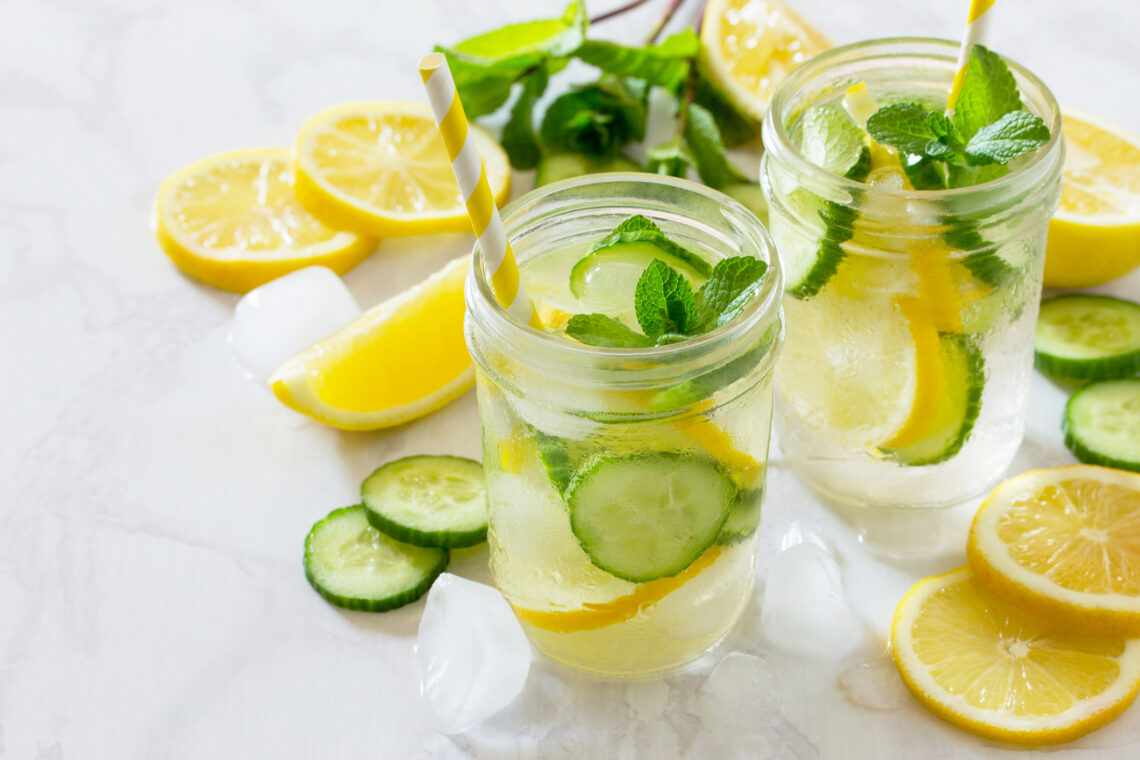
Whatever your New Year’s resolution is, I wish you the best of luck. If you don’t have one, join me in rethinking your drink. Stop and think of a healthier choice to quench your thirst, like water or low-fat or fat-free milk with no added sugar, or create your own flavored water by adding fruit and/or mint leaves to your cup or pitcher of water. Below is a recipe to follow from the University of Maine Extension.
Flavored Water (No Sugar Added)
Serves: 6 | Serving Size: 1 cup
Ingredients for Large Serving (6 cups):
6 cups water
2 cups of fresh fruit (strawberries, raspberries, pineapple, watermelon, pomegranate seeds, grapefruit, lemons, limes, etc.)
Optional: 10 fresh mint leaves
Ingredients for Single Serving (1 cup):
1 cup water
1/3 cup fresh fruit (strawberries, raspberries, pineapple, watermelon, pomegranate seeds, grapefruit, lemons, limes, etc.)
Optional: 2 fresh mint leaves
Directions
1. Cut washed fruit into halves, slices, or chunks, depending on your chosen fruit.
2. Optional: cut or tear-washed mint leaves in half.
3. Place cut fruit and mint leaves in a large pitcher or a single-serving glass.
4. Optional: lightly mash fresh fruit to get the most flavor.
5. Fill the container with water.
6. Optional: substitute 1 cup of water for unflavored tonic or seltzer water.
7. Refrigerate for at least 30 minutes up to 4 hours to allow the ingredients to infuse.
8. Strain and serve over ice if desired.
9. Storage: drain fruit within 24 hours to avoid bitterness and refrigerate for up to three days.
Combination Ideas
Raspberry or strawberry, lemon and mint
Kiwi, strawberry and mint
Blueberry, lemon and mint
Pineapple and mint
Watermelon and mint
Lemon and lime
Reina Hasting is the program manager of the Supplemental Nutrition Assistance Program Education (SNAP-Ed), administered by the University of Alaska Fairbanks Cooperative Extension Service in cooperation with the USDA. Contact her at rhhasting@alaska.edu or 907-474-2437.
